Top 5 Customer Service Chatbots for Businesses in 2026
Overview of Customer Service Chatbots
What Is a Customer Service Chatbot?
A customer service chatbot is a software solution that uses artificial intelligence (AI) or rule-based automation to interact with customers through channels such as websites, Facebook, Instagram, WhatsApp, and other messaging platforms.
Its primary role is to handle common customer inquiries, provide product information, answer frequently asked questions, assist with order tracking, and support post-purchase interactions.
Unlike traditional chatbots that rely solely on predefined scripts, modern AI chatbots leverage Natural Language Processing (NLP) to understand context, interpret user intent, and generate more human-like responses. This allows businesses to deliver faster and more personalized customer experiences at scale.
Customer service chatbots are rapidly becoming a core component of support operations. Industry forecasts suggest that by 2026, AI could handle up to 80% of routine customer interactions, including FAQs, order inquiries, and basic technical support. As a result, chatbots are evolving from support tools into primary customer engagement channels.
Why Are Chatbots Becoming a Major Customer Service Trend in 2026?
The growing adoption of chatbots is driven by both changing customer expectations and increasing operational demands.
Customers now expect immediate responses. Studies show that most consumers prefer real-time engagement rather than waiting hours for support. For businesses serving large customer volumes, chatbots are one of the few scalable ways to provide 24/7 availability.
At the same time, chatbots deliver measurable operational benefits. Organizations implementing AI-powered customer service solutions have reported improvements in productivity, faster resolution times, and reduced support costs.
Beyond efficiency gains, chatbots enable businesses to scale customer service without proportionally increasing headcount, making them a strategic investment rather than simply a support tool.

Why Businesses Need Customer Service Chatbots
1. Meet Customer Expectations for Instant Responses
Modern customers expect answers immediately, especially on messaging channels. Chatbots ensure businesses remain responsive around the clock, helping reduce missed opportunities and improve customer satisfaction.
2. Reduce Workload for Customer Support Teams
Many customer inquiries are repetitive, such as questions about pricing, product details, delivery options, or return policies. Chatbots can automatically handle these requests, allowing support agents to focus on higher-value conversations.
3. Deliver Consistent Customer Experiences
Chatbots follow predefined workflows and knowledge bases, ensuring customers receive accurate and consistent information regardless of when or where they reach out.
4. Collect Valuable Customer Data
Every interaction provides insights into customer interests, preferences, and behaviors. Chatbots help businesses capture and organize this information for future marketing, sales, and customer retention initiatives.
5. Manage Multi-Channel Conversations Efficiently
When integrated with platforms like SaleSmartly, chatbots can manage conversations across Facebook, Instagram, WhatsApp, websites, and more from a centralized workspace. This prevents missed messages and creates a seamless customer experience across channels.
In short, customer service chatbots help businesses automate support, improve operational efficiency, and create more scalable customer engagement processes.
Top 5 Customer Service Chatbot Platforms in 2026
1. SaleSmartly – AI Customer Service Chatbot for Multi-Channel Support
SaleSmartly combines AI chatbot automation with a unified customer communication platform, allowing businesses to manage conversations from multiple channels in one place.
As customer interactions become increasingly fragmented across social media, messaging apps, and websites, SaleSmartly helps teams centralize communication while maintaining fast and consistent service.

Key Features
- Build customizable AI chatbot workflows for customer service and sales scenarios.
- Automate responses based on customer behavior, keywords, and the context of the conversation.
- Support multiple channels, including Facebook, Instagram, WhatsApp, Telegram, and websites.
- Seamlessly transfer conversations from chatbots to live agents when human assistance is required.
- Enable real-time multilingual translation for international customer support.
- Tag, segment, and categorize customers during conversations for future engagement and remarketing.
SaleSmartly is particularly well-suited for businesses that manage customer interactions across multiple channels and seek to combine automation with centralized conversation management.
2. ManyChat
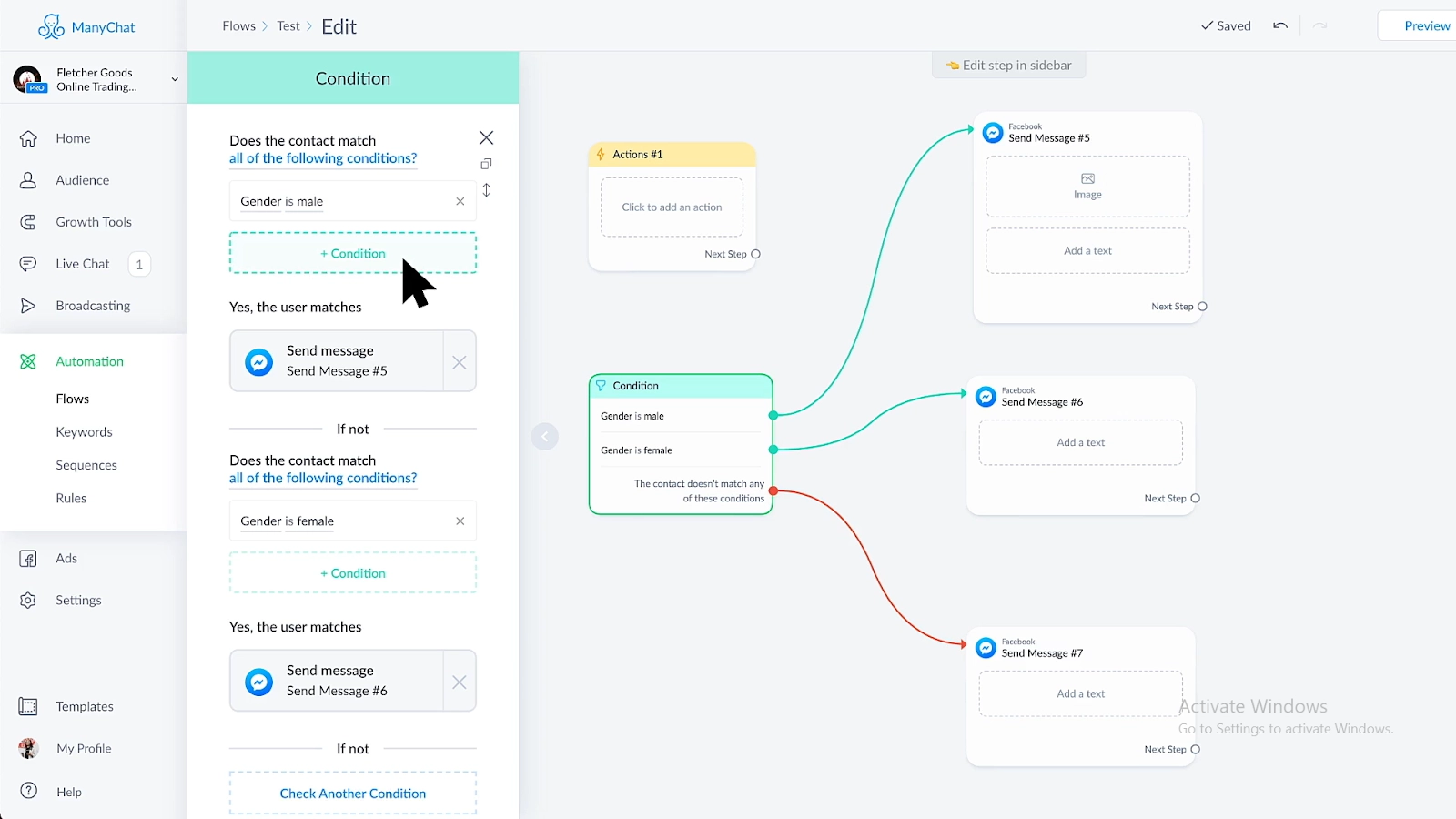
ManyChat is one of the most widely recognized chatbot platforms for Facebook Messenger and Instagram. It is designed to help businesses automate conversations while supporting marketing and sales campaigns directly through messaging channels.
Key Features
- Create automated messaging sequences and customer journeys.
- Capture leads through forms, surveys, and conversational interactions.
- Launch broadcast campaigns to large customer audiences.
- Integrate with tools such as Shopify, Mailchimp, and Google Sheets.
- Build behavior-based workflows that guide customers through the sales funnel.
ManyChat is particularly strong for businesses focused on social media marketing and conversational commerce.
3. Respond.io
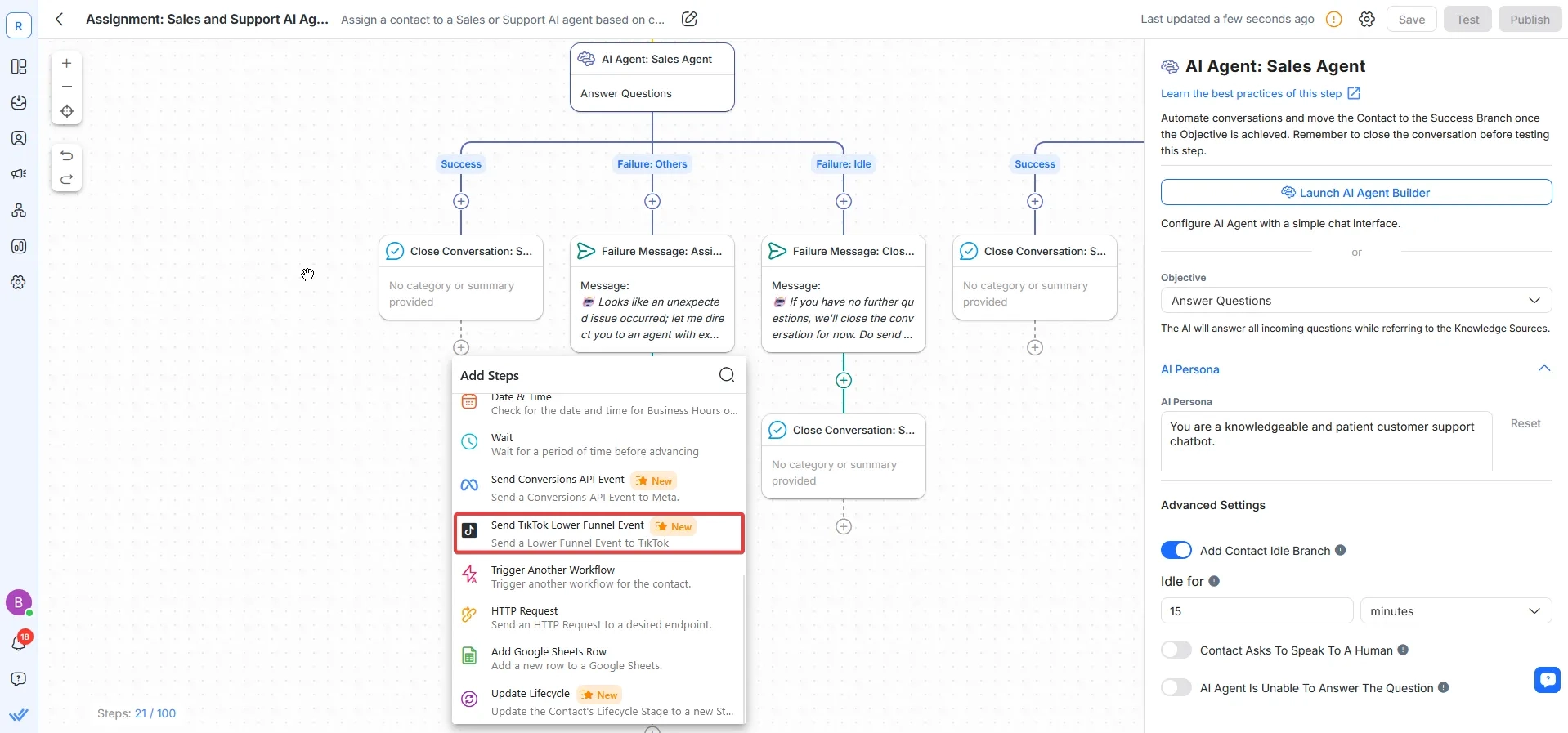
Respond.io is a customer conversation management platform designed for businesses that require structured workflows and scalable customer engagement processes.
Rather than focusing solely on chatbot creation, Respond.io emphasizes workflow automation and centralized customer communication management.
Key Features
- Build advanced multi-step chatbot workflows.
- Automatically route conversations to the appropriate teams or agents.
- Use AI-powered assistance for responses, translations, and conversation handling.
- Integrate with CRM systems and business applications.
- Manage customer conversations across Facebook, Instagram, WhatsApp, email, and other channels.
Respond.io is ideal for organizations seeking greater control over customer service operations and workflow automation.
4. Chatfuel
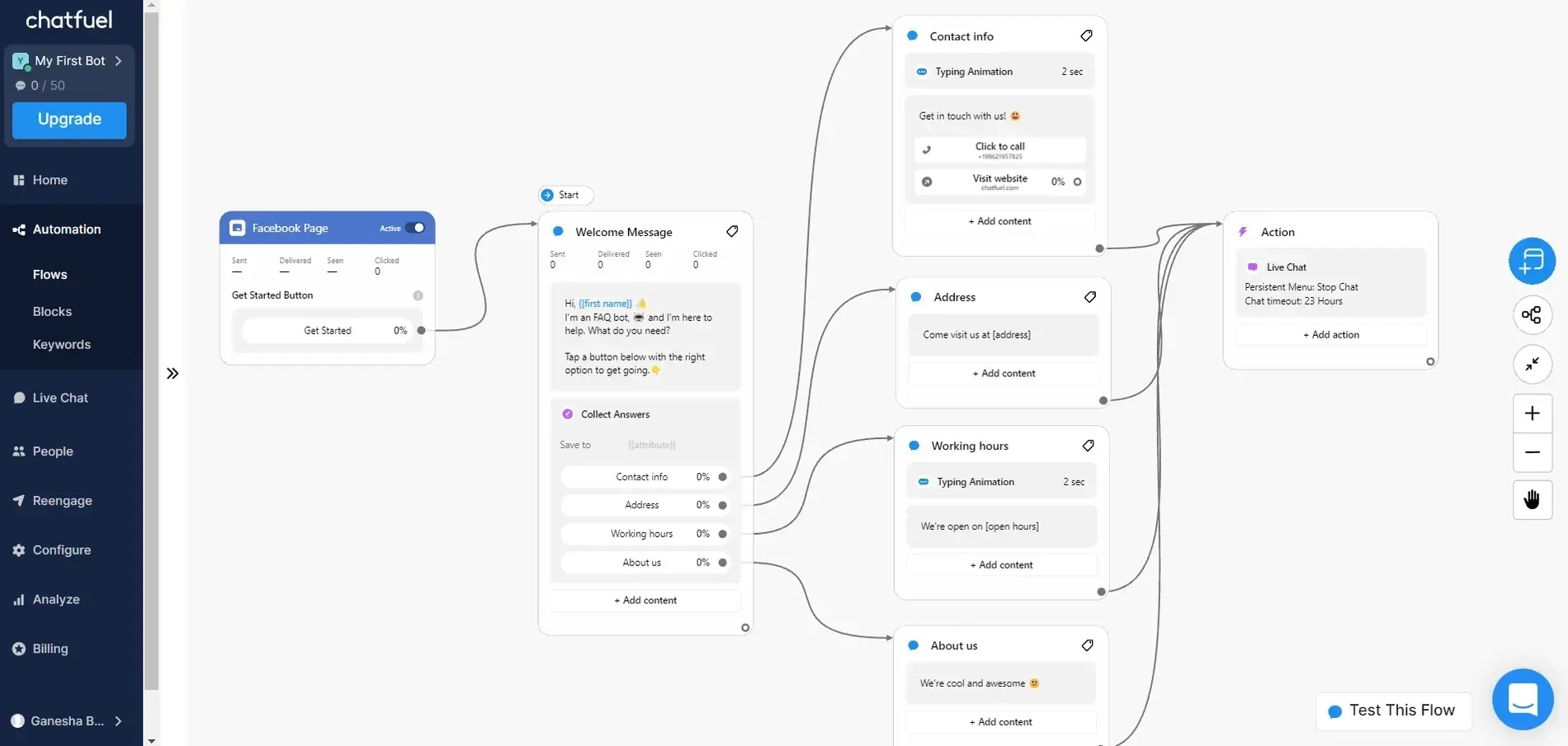
Chatfuel is one of the longest-standing chatbot platforms in the market and is known for its ease of use and quick deployment.
It enables businesses to create chatbot experiences without requiring extensive technical expertise.
Key Features
- Visual drag-and-drop chatbot builder.
- Keyword-triggered automated responses.
- Pre-built templates for common customer service scenarios.
- Fallback responses for unexpected user inputs.
- Integration with selected third-party tools and platforms.
Chatfuel is a practical option for businesses looking to implement chatbot automation quickly and with minimal complexity.
5. Tidio
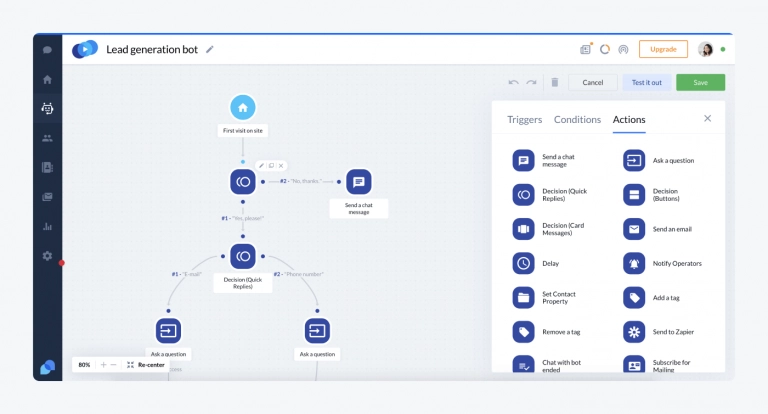
Tidio combines AI chatbots with live chat functionality, making it particularly popular among e-commerce businesses and website-based customer support teams.
The platform focuses on helping businesses engage visitors in real time while automating routine support requests.
Key Features
- AI-powered chatbot responses for common customer inquiries.
- Smooth handoff between chatbot and live agents.
- Fast website deployment with minimal setup requirements.
- Visitor behavior tracking for personalized engagement.
- Integrations with leading eCommerce and marketing platforms.
Tidio is a strong choice for small and medium-sized businesses looking for a lightweight yet effective chatbot solution.
Conclusion
Customer service chatbots have evolved far beyond simple automated response tools. Today, they play a critical role in customer engagement, operational efficiency, and business growth.
Each platform offers unique strengths. Businesses focused on social media marketing may benefit from ManyChat's automation capabilities. Organizations requiring advanced workflow management may find Respond.io more suitable. Meanwhile, Chatfuel and Tidio provide accessible solutions for businesses seeking straightforward chatbot deployment.
For companies managing customer interactions across multiple channels, SaleSmartly stands out by combining AI chatbot automation with centralized conversation management. This enables businesses to improve response times, streamline operations, and deliver a more consistent customer experience at scale.
Try SaleSmartly now to optimize your customer service operation!
What Is the Customer Journey? How to Build One That Converts
What is the customer journey, and why does it matter for businesses? Learn the key steps to build a high-converting customer journey that drives engagement and sales.
What Is Zalo Chatbot? Step-by-Step Guide to Set Up Auto-Reply in 15 Minutes
What is a Zalo chatbot and why do Vietnamese businesses need one? Step-by-step guide to setting up Zalo auto-reply in 15 minutes — no coding required.
