What Is A Chatbot? Types, Use Cases And How To Deploy For Customer Service Teams
Key Takeaways
- A chatbot is software that simulates conversations with humans through text or voice, enabling customer service teams to respond automatically 24/7 across chat channels and websites.
- The three main types of chatbots are rule-based chatbots that follow pre-built flows, AI chatbots that use natural language processing (NLP) to understand context, and hybrid chatbots that combine both.
- Chatbots handle 60-80% of repetitive questions (business hours, return policies, order status) according to AWS, freeing up agents to focus on complex requests that require specialized support.
Every evening after business hours, your online shop still receives dozens of messages asking about prices, order status, and return requests. Without anyone responding, customers move on to a shop that replies faster. So what is a chatbot and why are so many shops deploying them to solve this problem?
What Is A Chatbot?
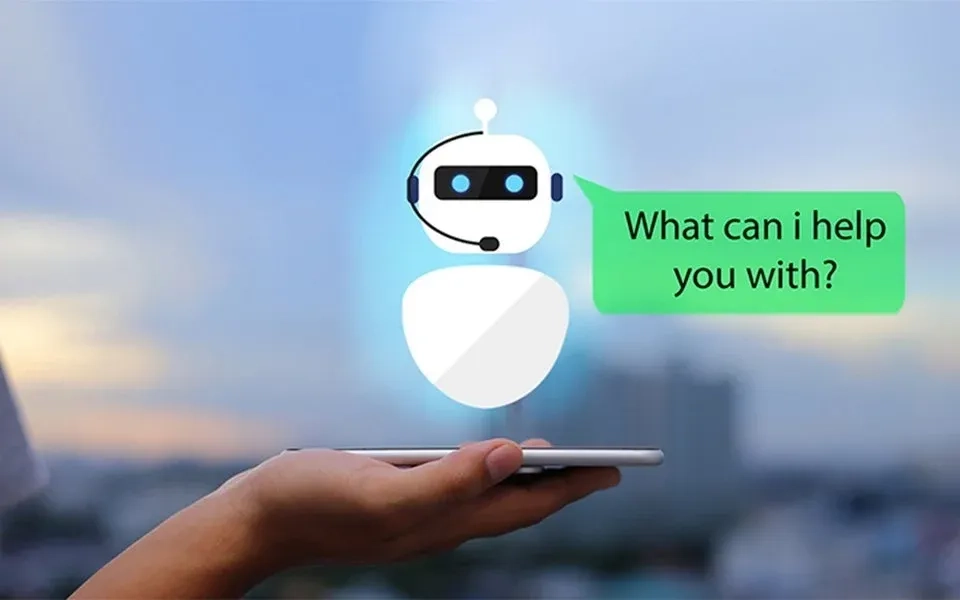
A chatbot is software that simulates conversations with humans through text or voice. When a customer sends a message, the chatbot receives the content, analyzes the question, and responds automatically based on pre-built scripts or artificial intelligence (AI).
The first chatbot, named ELIZA, was created in 1966 at MIT with only basic keyword recognition capabilities. Today, modern AI chatbots like ChatGPT (OpenAI) can understand context, respond flexibly, and handle complex questions in multiple languages.
It is important to distinguish chatbots from AI agents. While a chatbot answers questions within its configured scope, an AI agent can independently plan and execute multi-step workflows automatically (for example, checking an order, processing a refund, and sending a confirmation in sequence without any human intervention).
Common Types Of Chatbots For Customer Service Team
The most common chatbot types for customer service departments include rule-based chatbots operate on pre-built question flows, AI chatbots use natural language processing (NLP) to understand context, and hybrid chatbots combine both to optimize effectiveness.
Rule-Based Chatbots
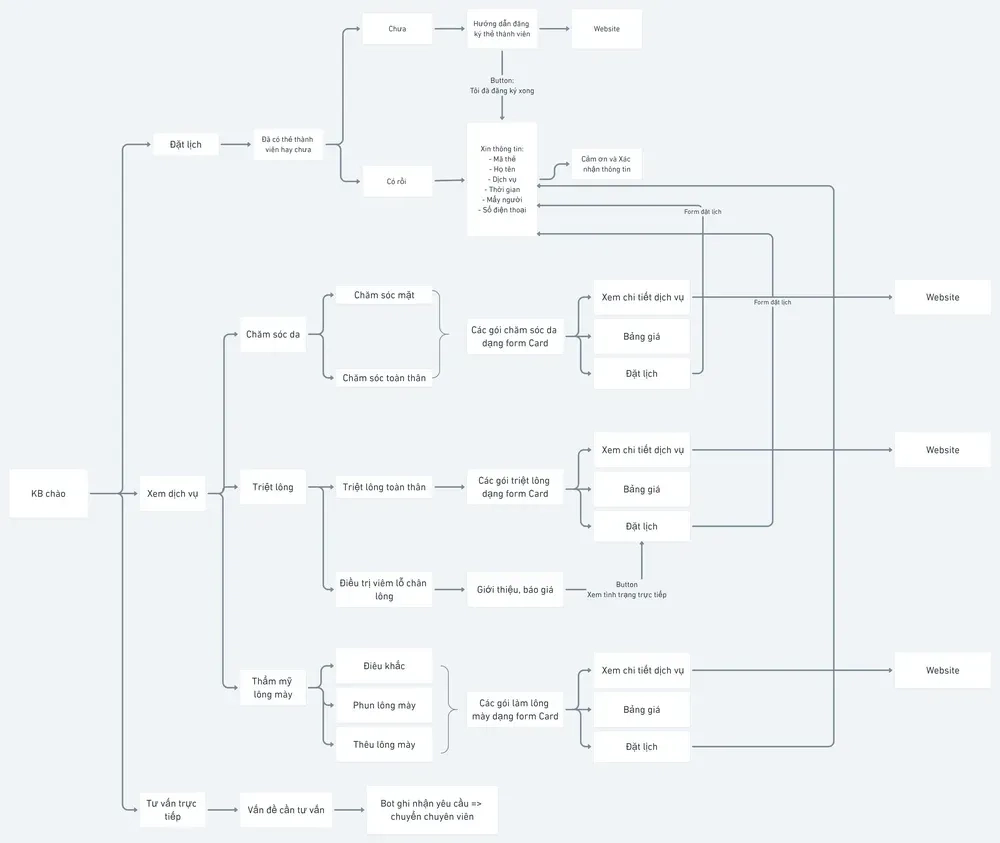
Rule-based chatbots operate through menus, buttons, and pre-programmed question flows. When a customer sends a message, the bot displays options and guides the conversation step by step.
This type of chatbot suits questions with fixed answers. For example, chatbots on Zalo and Facebook Messenger used by many online shops in Vietnam provide quick menus for customers to select "Ask about price," "Check order," or "Return policy." However, rule-based chatbots hit their limits when customers ask open-ended questions or use phrasing outside the script.
Keyword-Based Chatbots
Keyword-based chatbots identify specific words or phrases pre-configured in a message to deliver corresponding answers. For instance, when a customer asks "How much does this product cost?", the bot detects the word "cost" and sends the price list or a link to the product page.
This approach works well for frequently repeated questions such as pricing, business hours, addresses, or shipping policies. Businesses can set up quick answers without building a complex system, and customers can type their questions freely rather than only selecting buttons from a menu.
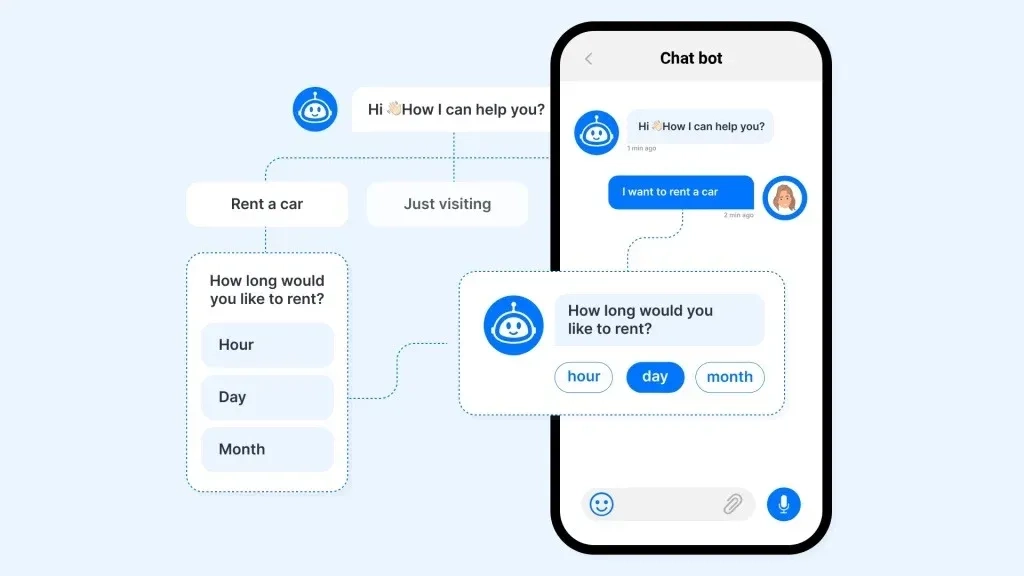
However, keyword-based bots depend on a predefined keyword list and script. If a customer misspells a word, uses phrasing that has not been configured, or asks a question that requires contextual understanding, the bot may respond inaccurately.
AI Chatbots
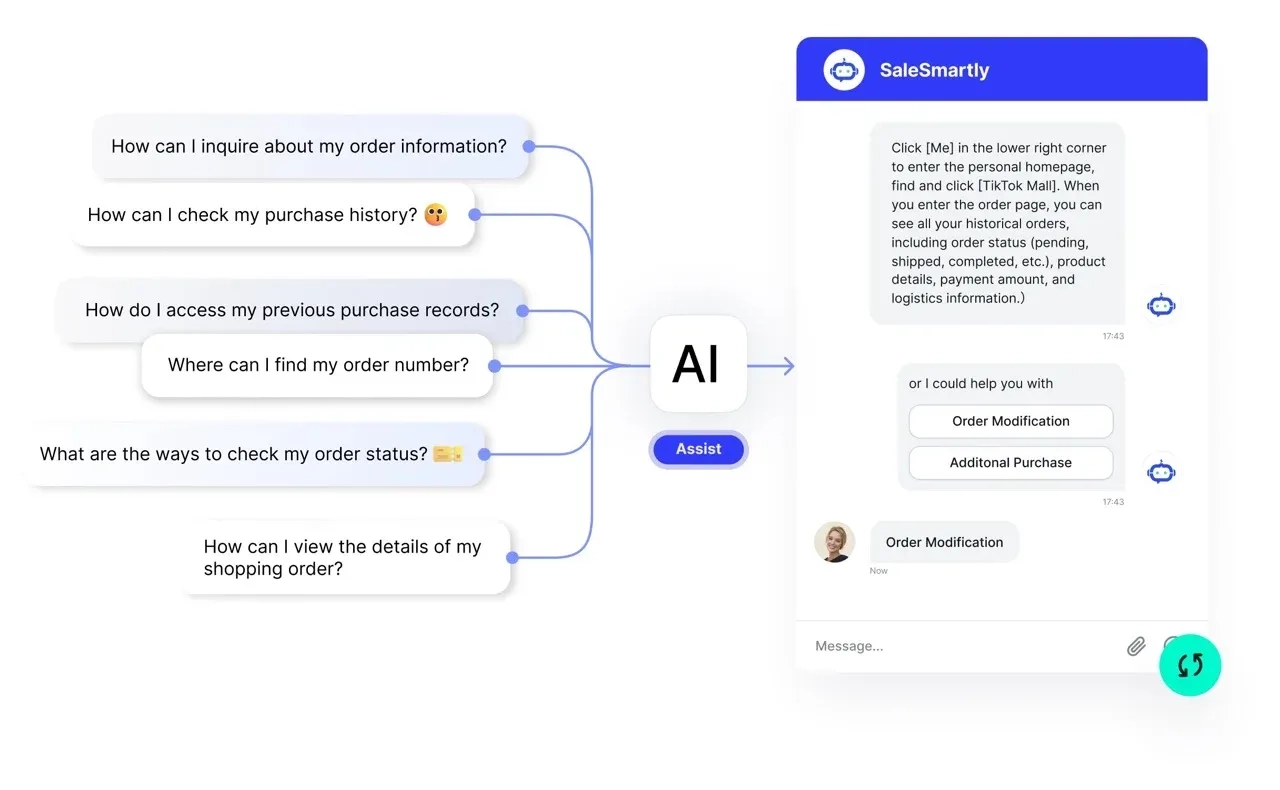
AI chatbots use natural language processing (NLP) and large language models (LLM) to understand customer intent and respond flexibly. Rather than being confined to pre-built menus, AI chatbots analyze the context of each question and generate an appropriate answer.
ChatGPT (OpenAI) and Google Gemini are prominent examples of globally popular AI chatbots. In customer service, AI chatbots can recommend products based on customer descriptions, handle complex questions, and respond in multiple languages. That said, AI chatbots require quality training data to respond accurately, so deployment costs tend to be higher than rule-based chatbots.
Hybrid Chatbots
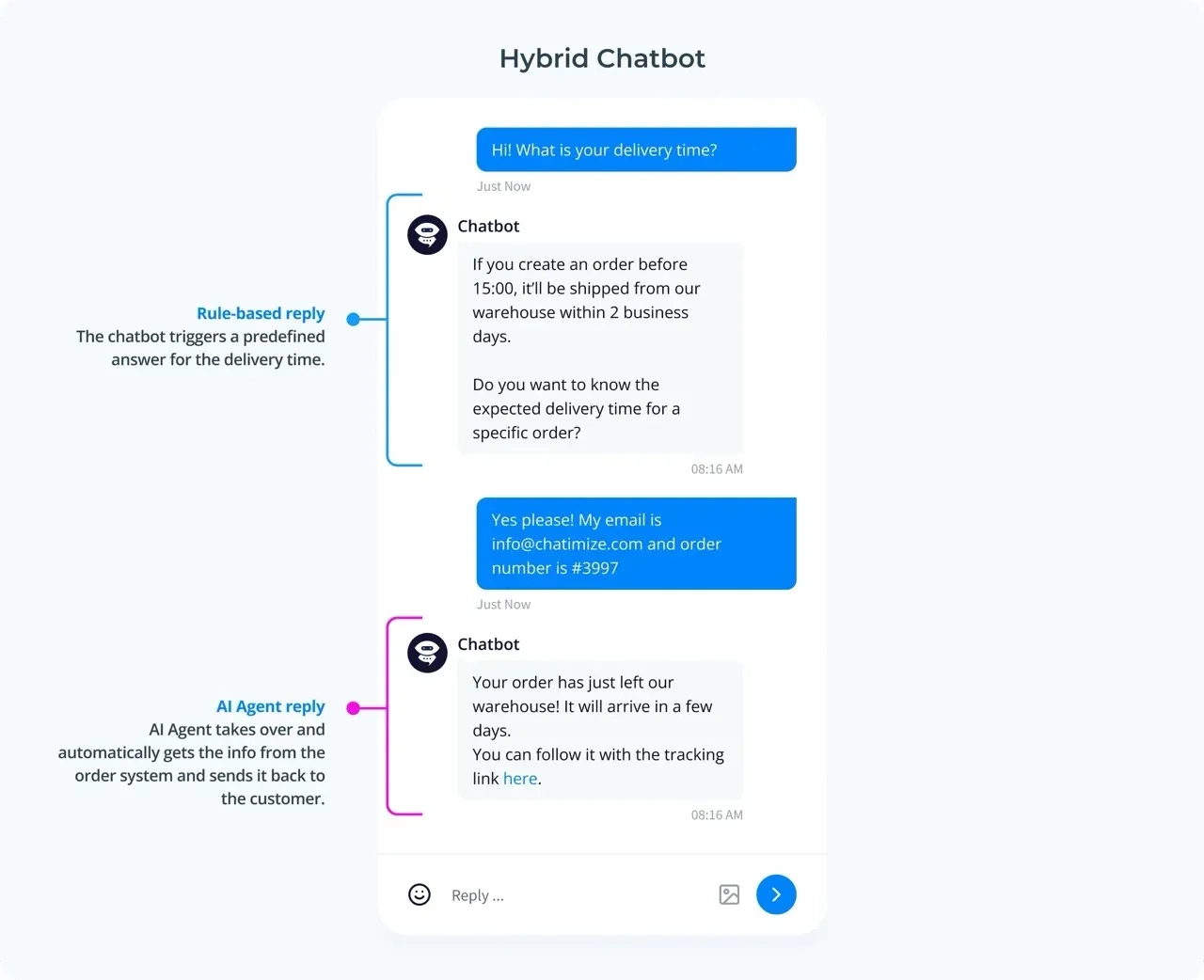
Hybrid chatbots combine pre-built scripts for frequently asked questions with AI for complex requests. This is currently the most common type in customer service because it balances response speed, cost, and flexibility.
For example, when a customer asks about business hours or return policies, the hybrid chatbot answers instantly from its script. When a customer asks for product recommendations based on specific needs, the AI processes the question and provides suggestions. If the question exceeds the bot's capabilities, the system transfers to an agent along with the full conversation history.
The table below summarizes the differences between the chatbot types for easy comparison:
| Criteria | Rule-Based Chatbot | Keyword-Based Chatbot | AI Chatbot | Hybrid Chatbot |
|---|---|---|---|---|
| How it works | Menus, buttons, pre-built flows | Keyword detection in messages | NLP + machine learning, context understanding | Scripts for FAQ + AI for complex questions |
| Flexibility | Low, limited to scripts | Moderate, depends on keyword list | High, handles open-ended questions | Medium to high |
| Deployment cost | Low, quick setup | Low, simple configuration | Higher, requires training data | Medium |
| Best for | FAQ, request classification | Repetitive questions with fixed answers | Product consultation, complex CS, multilingual | Online shops needing automation + human agents |
| Examples | Messenger/Zalo menu bots | Auto-reply by keyword | ChatGPT, Google Gemini | SaleSmartly, ManyChat |
How Does A Chatbot Work?
A chatbot operates in three main steps: receiving a message from the customer (input), processing the content to identify intent (processing), and sending an appropriate response (output). Depending on the chatbot type, the processing step differs significantly.
For rule-based chatbots, processing simply involves matching the customer's keyword or menu selection to a pre-programmed answer. As a result, rule-based chatbots respond very quickly but are limited to their scripts.
For AI chatbots, processing is more complex and involves multiple layers:
- Intent recognition: NLP analyzes the question to determine what the customer wants (price inquiry, complaint, order check)
- Entity extraction: Identifies specific information in the question (product name, order number, purchase date)
- Response generation: Based on the identified intent and entities, the chatbot creates an appropriate answer or retrieves information from the database
Hybrid chatbots combine both flows. The system first checks whether the question matches an FAQ script. If so, it answers from the script immediately. If not, it routes AI for processing. Teams can set up this automation flow using a drag-and-drop interface without writing any code.
What Benefits Do Chatbots Bring To Online Shops And Customer Service Teams?
Chatbots help your customer service team respond to customers 24/7, handle hundreds of messages simultaneously, reduce wait times, and free up agents to focus on complex requests. Online shop CS teams and service businesses in Vietnam typically see five key benefits when deploying chatbots:
- Instant 24/7 responses: Chatbots respond outside business hours and on weekends, reducing the rate of customers leaving because of long wait times.
- Unlimited simultaneous handling: Agents are limited to 3-5 conversations at a time, while chatbots handle hundreds of messages simultaneously across multiple channels.
- Automatic request classification: Chatbots identify the type of request (price inquiry, return, complaint) and route it to the appropriate agent, saving manual sorting time.
- Personalized responses based on customer data: AI chatbots look up purchase history and customer names to personalize each answer. Platforms like SaleSmartly allow you to set up multi-model AI chatbots (ChatGPT, DeepSeek, Coze, Dify) combined with conversation history across all channels.
- Reduced operating costs: Chatbots handle 60-80% of repetitive questions (business hours, return policies, order status) according to AWS, helping small teams operate efficiently without hiring additional staff.
When Should You Use A Chatbot?
Chatbots are most effective when your team needs to automate repetitive interactions, respond outside business hours, or serve customers across multiple channels simultaneously. Below are the four most common use cases.
- Pre-sale and post-sale customer service: Chatbots answer product questions, guide purchases, confirm orders, and assist with returns. This is the most common use case in Vietnam, particularly on Zalo, Facebook Messenger, and website live chat.
- Sales support and product consultation: AI chatbots suggest products based on customer need descriptions, compare features across products, and guide the ordering process.
- Lead qualification and collection: Chatbots on website live chat ask screening questions (budget, scale, needs) and route qualified leads to the appropriate salesperson. This is a common application for B2B and SaaS businesses.
- Internal team support: Chatbots answer questions about company policies, leave procedures, and internal system guides, helping HR and IT departments reduce repetitive requests.
Why Choose SaleSmartly As Your Omnichannel Chatbot Platform?
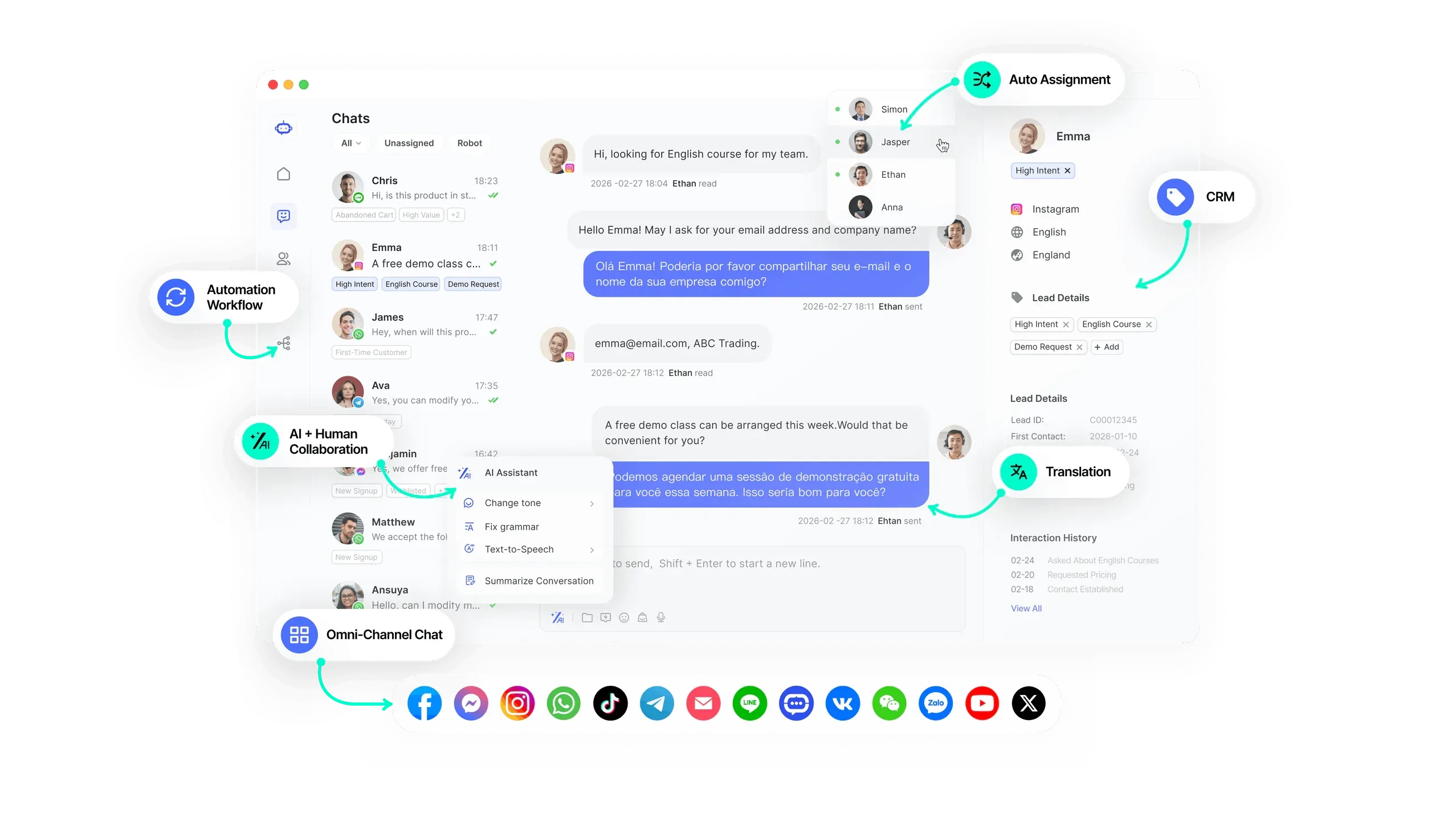
SaleSmartly provides a hybrid chatbot combining automated scripts with multi-model AI, operating across Zalo, Facebook Messenger, Instagram, WhatsApp, Telegram, and website live chat from a single platform.
Your customer service team can deploy chatbots on SaleSmartly with four core capabilities:
- Multi-model AI chatbot: Integrate ChatGPT, DeepSeek, Coze, or Dify so the chatbot responds flexibly based on context.
- Drag-and-drop script builder: Your team builds conversation flows, classifies requests, and sets up auto-responses without writing any code.
- Bot-to-agent handoff: When the chatbot encounters a question outside its script, the system immediately transfers to an agent along with the full conversation history so the customer does not have to repeat their issue.
- Real-time translation across 130+ languages: Suited for cross-border shops serving international customers.
Explore SaleSmartly to see how it supports customer service teams deploying omnichannel chatbots.
Conclusion
Your customer service team can start with a rule-based chatbot covering the 10-15 most frequently asked questions, then run it for 2-3 weeks to evaluate the automated handling rate. Once you have data on the questions the chatbot cannot answer, that is the right time to add AI and expand to a hybrid chatbot across multiple channels.
FAQs
What Are The Main Functions Of A Chatbot?
A chatbot performs four main functions: automatically answering frequently asked questions, classifying and routing requests to the appropriate agent, collecting customer information, and supporting sales through product consultation. AI chatbots can also personalize responses based on interaction history.
What Is The Difference Between A Chatbot And A Chatbox?
A chatbot is software that automatically replies to messages, while a chatbox (or chat widget) is the interface element displayed on a website where customers type their messages. The chatbox is the "window" customers see, and the chatbot is the "brain" processing behind it. A chatbox can connect to a chatbot or route directly to a human agent.
What Is The Best Chatbot Right Now?
ChatGPT, Claude, and Google Gemini are strong choices for general consultation and content creation. ManyChat is popular with shops selling on Facebook and Instagram. SaleSmartly suits customer service teams that need a hybrid chatbot operating simultaneously across multiple channels (Zalo, Messenger, WhatsApp, live chat). The right choice depends on your primary communication channel, the types of questions you need to automate, and your budget.
Which AI Chatbot Platforms Are Popular In Vietnam?
Several AI chatbot platforms widely used in Vietnam include FPT.AI (developed by FPT), Bizfly Chat (VCCorp), and SaleSmartly (supporting Vietnamese with multi-model AI chatbot). Many online shops in Vietnam also use rule-based chatbots on Zalo OA and Facebook Messenger combined with AI chatbots for handling complex questions.
How Do You Use An AI Chatbot?
Start by identifying the questions your customers ask most frequently (FAQ) and set up a rule-based chatbot to handle those first. Then connect an AI chatbot to process open-ended questions and product consultation. Your team should review chatbot conversations weekly to identify questions the bot has not answered well and update scripts or training data accordingly.
AI Chatbot: How It Works, Benefits And How To Deploy
An AI chatbot uses artificial intelligence to understand context and respond to customers flexibly. Learn about NLP, LLM, RAG technology and deployment strategies.
AI Agent: How It Works, Use Cases, Comparison with AI Chatbots
An AI Agent is an autonomous AI system capable of planning and executing multi-step processes. Learn how it works, practical use cases, and what sets it apart from AI Chatbots.
