What Is Email Marketing? ROI, Types, And How To Start Building An Owned Channel
Every marketing channel your team invests in eventually depends on someone else. Facebook decides who sees your page, TikTok tweaks the algorithm, Google adjusts search ranking rules.
Email marketing is the exception. When a customer joins your list, that connection belongs to your business, not a platform that might change its policy next quarter. This is the strategic reason email has held the highest ROI position among digital marketing channels for over a decade, and why marketing teams keep coming back to it even as newer channels rise and fall.
What Is Email Marketing?
Email marketing is the practice of using email to send commercial messages, product updates, educational content, or transactional notifications to a list of subscribers who have opted in to hear from your business, with the goal of nurturing customer relationships and driving revenue.
The strategic difference between email and other digital channels comes down to ownership. When someone subscribes to your email list, your business owns the relationship directly. Algorithm changes at Facebook, Google, or TikTok do not affect whether your emails reach your subscribers, which makes email a long-term asset rather than rented attention.
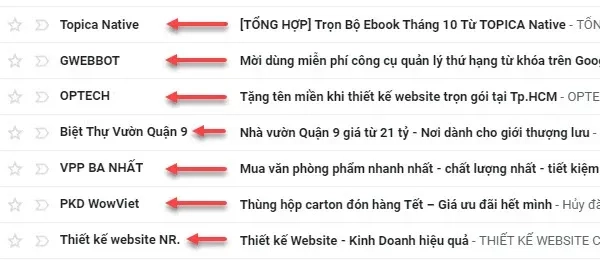
Email marketing sits across three stages of the customer journey:
- Lead nurturing: Educating prospects who are not ready to buy, building trust over weeks or months before conversion.
- Conversion: Driving direct action from customers who are close to a purchasing decision.
- Retention: Keeping existing customers engaged, encouraging repeat purchases, and reducing churn.
Each stage uses different email types, tone, and frequency, but the underlying mechanic is the same: a direct message to someone who chose to hear from you.
Why Does Email Marketing Still Deliver The Highest ROI?
According to Litmus's State of Email report, email marketing delivers an average return of $36 for every $1 spent, which is higher than any other digital marketing channel, and 41% of marketers rank email as their most effective channel overall.
The three structural reasons email keeps outperforming newer channels:
- Low cost per send: Sending an email costs a fraction of what Facebook, Google, or TikTok ads charge per impression, so the same budget reaches your list many more times.
- Owned audience access: Every email lands in the inbox of a subscriber who chose to receive your messages, without any platform in between deciding who sees what.
- Detailed measurement and automation: Open rates, click rates, and conversion rates are trackable per email, and automated flows built once can run continuously for hundreds of customers at different funnel stages.
For businesses running high-volume commerce (e-commerce, SaaS, subscription services), these three advantages compound over time. A well-built email program becomes an increasing share of revenue rather than a channel that costs more each quarter to maintain.
Common Types Of Email Marketing
Successful email marketing programs combine several email types, each serving a specific purpose in the customer journey. The five most common types your team should build:
- Welcome emails: Sent automatically the moment a subscriber joins your list. These usually have the highest open rates of any email type (GetResponse recorded over 80% in their 2023 data) because customers actively expect them.
- Promotional emails: Announce discount codes, flash sales, seasonal campaigns, or product bundles. These drive short-term revenue and work best with clear deadlines and a single call to action.
- Nurture emails: Share educational content, product tutorials, industry insights, or birthday wishes. Nurture emails keep the relationship active between purchase moments.
- Abandoned cart emails: Remind customers who added items to their cart but did not complete checkout. These consistently rank as some of the highest-converting emails in e-commerce.
- Transactional emails: Send order confirmations, shipping updates, invoices, and payment receipts. Customers actively expect these, which produces very high open rates and makes them valuable secondary marketing touchpoints.
Beyond these five, sales teams working with B2B customers frequently send email quotations during the final stages of the funnel. Well-structured pricing quotation email templates help sales reps present offers professionally and increase deal-close rates by standardizing the format across the team.
How To Send Bulk Email That Actually Reaches Inboxes
Sending bulk email at scale requires meeting technical and legal standards that get stricter every year. Missing these standards causes emails to land in spam or get blocked entirely. Four operational requirements your team needs to meet:
Authenticate Your Sending Domain
Since February 2024, Gmail and Yahoo require bulk senders (approximately 5,000 emails per day to personal accounts) to authenticate their sending domain with SPF, DKIM, and DMARC records, provide one-click unsubscribe, and keep spam complaint rates below 0.3%. Not meeting these requirements causes bulk emails to be blocked or diverted to spam.
Segment Your Recipient List
Sending the same content to your entire list usually produces lower conversion than segmented sends. Group subscribers by purchase behavior, engagement level, or funnel stage so each segment receives content matching their actual position in your customer journey.
Personalize Subject Line And Body
Subject lines containing the recipient's name or a reference to their past behavior consistently outperform generic subject lines. Personalization tokens are supported by every major email platform and take minutes to configure.
Test Across Devices
Over half of email opens now happen on mobile devices. Every template should be tested on both desktop and mobile before sending in bulk, and image-heavy designs need to degrade gracefully when images fail to load.
How To Choose An Email Marketing Platform
The email marketing platform market includes several strong options that fit different team sizes and budgets. Well-known global platforms include Mailchimp, MailerLite, ActiveCampaign, Brevo, GetResponse, and Klaviyo.
When evaluating platforms, four criteria typically matter most:
- Delivery infrastructure quality: Platforms with strong sending infrastructure help emails land in inboxes rather than spam folders, especially critical when your list grows past 10,000 subscribers.
- Automation capabilities: The ability to build behavior-triggered email sequences (welcome flows, cart abandonment, re-engagement) makes email scale without proportional labor increase. Klaviyo has publicly reported that automated flows generate roughly 41% of email revenue from about 5.3% of total sends.
- Integration with your existing stack: The platform needs to connect with your CRM, e-commerce system, and website signup forms so subscriber data flows automatically.
- Reporting and analytics: Clear dashboards showing open rates, click rates, and conversion rates across campaigns help your team optimize continuously instead of guessing.
Beyond the platform for sending campaigns, businesses also need a way to handle the reply traffic those campaigns generate. Every promotional or nurture email produces customer questions, and those replies often land in a general support inbox that needs its own inbound email management system to keep sales and support teams responsive.
What Are Realistic Open Rate Benchmarks?
According to MailerLite's 2025 benchmark report based on over 3.3 million email campaigns, the average email open rate across industries reached 43.46%. Mailchimp reports a range of 35-45% depending on industry, with average click rates hovering around 2-3%.
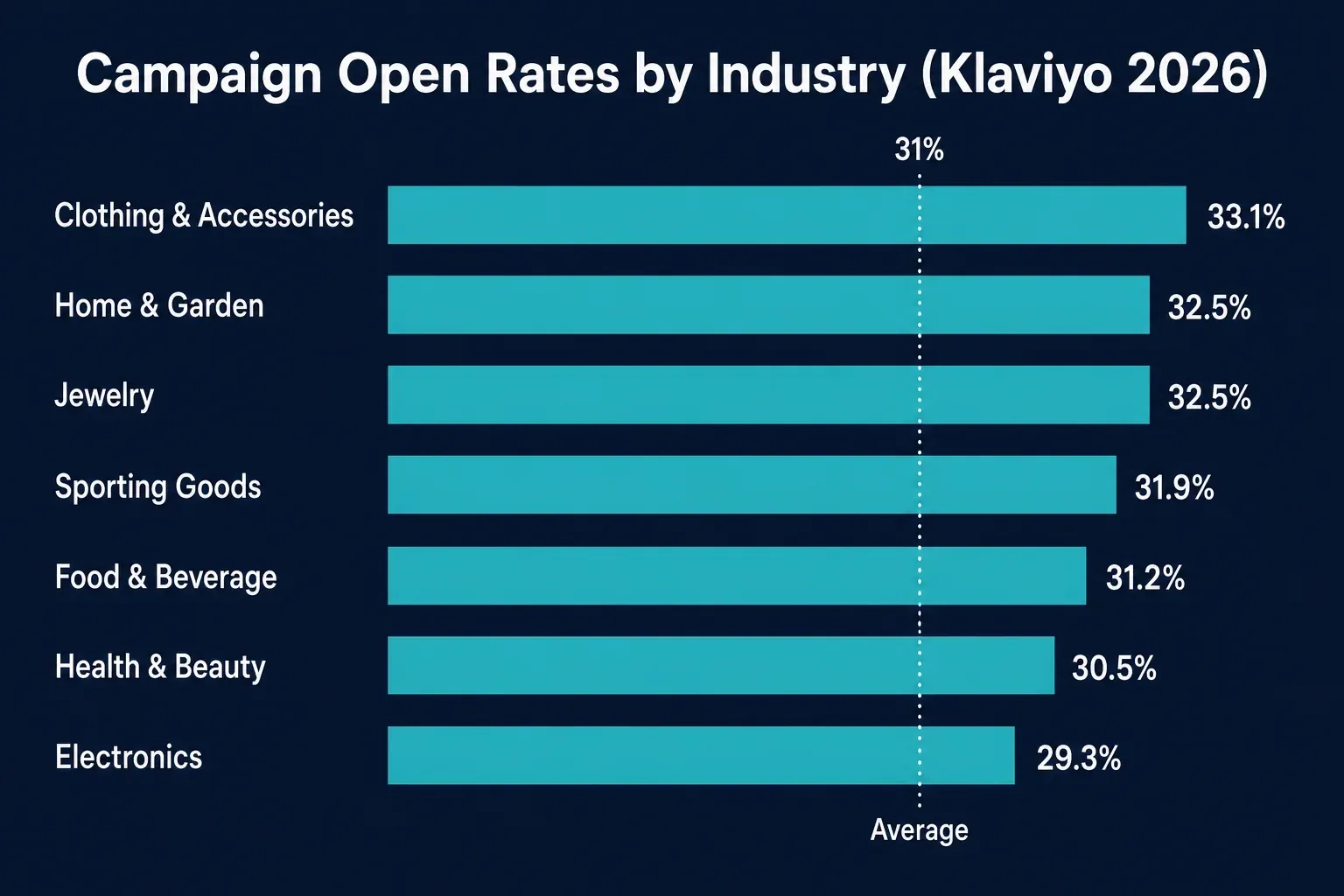
One important caveat when reading open rate data: since Apple introduced Mail Privacy Protection in 2021, the platform automatically preloads email images for Apple Mail users regardless of whether they actually open the email. Because Apple Mail accounts for 46% of email clients, aggregate open rate numbers have inflated by roughly 10-15 percentage points since 2021, and open rates alone are no longer a reliable engagement signal.
Industry-level benchmark ranges for reference (based on Mailchimp and MailerLite 2024 data):
| Industry | Average Open Rate |
|---|---|
| Healthcare, dental | 34-40% |
| Education | 35% |
| Non-profit | 40% |
| Retail, e-commerce | 18-31% |
| Software (SaaS) | 15-25% |
| Games, entertainment | 25% |
Because open rate is distorted by MPP, most modern marketing teams have shifted to Click-to-Open Rate (CTOR) and conversion rate as the primary engagement metrics for campaign optimization.
Where Email Support Gets Lost Between Marketing And Sales
Every promotional email or newsletter sent by your marketing team generates reply traffic within hours: questions about the offer, requests for redemption help, technical issues with the link, and sometimes ready-to-buy inquiries needing one more piece of information. Marketing teams running active email programs across multiple audiences typically run into three specific breakdown points in handling this reply stream:
- Replies land outside the sending platform: Marketing platforms like Mailchimp or Klaviyo excel at sending, but customer replies drop into your general support inbox with no link back to the campaign that triggered them.
- Sales and support miss campaign context: Agents responding to inbound email often cannot tell whether the customer is replying to a promo, a newsletter, or a transactional message, which slows every response.
- Multi-channel replies fragment further: When customers reply to an email campaign by messaging on Zalo, WhatsApp, or Instagram instead of email, those messages fragment across even more inboxes with no shared history.

Explore SaleSmartly to bring email support alongside Zalo, Facebook, Instagram, WhatsApp, TikTok, Telegram, and live chat into a single inbox, with each customer conversation showing full history across channels. Sales and support teams see which campaign the customer is responding to and can pick up the conversation with complete context, without slowing down while they hunt through separate tools.
Conclusion
Email marketing remains the most durable digital channel a marketing team can build because the audience relationship belongs to your business, not a platform that might change tomorrow. The path to a working email program is less about clever creative and more about consistency: pick one email type to start with (welcome or newsletter usually works best), send it regularly for 3-6 months to establish a baseline, then layer in more sophisticated automation as your data matures. Teams that treat email as a strategic infrastructure investment tend to see revenue contribution grow year over year, while teams that treat it as a one-off campaign tactic usually plateau early.
Promotional Message Templates: 12 Ready-To-Use Examples For Every Campaign Type
Get 12 promotional message templates for flash sales, birthdays, VIP loyalty, product launches, and cart recovery, plus rules for writing promo messages that convert.
Customer Service Skills: 7 Core Competencies And How To Build Them Into Your Team
Learn the seven core customer service skills your team needs, how to train each one, and how to spot gaps before they cost you customer loyalty.
