What Is the Customer Journey? How to Build One That Converts
The customer journey has become one of the most critical factors driving marketing effectiveness and sustainable business growth — especially as customers now interact with brands across multiple channels before making a single purchase decision.
Yet many businesses still operate without a clear picture of where their customers are at any given moment, or what they actually need at each stage. This guide breaks down the key stages of the customer journey, how to build one that works, and how to optimize it for maximum conversion.
What Is the Customer Journey?
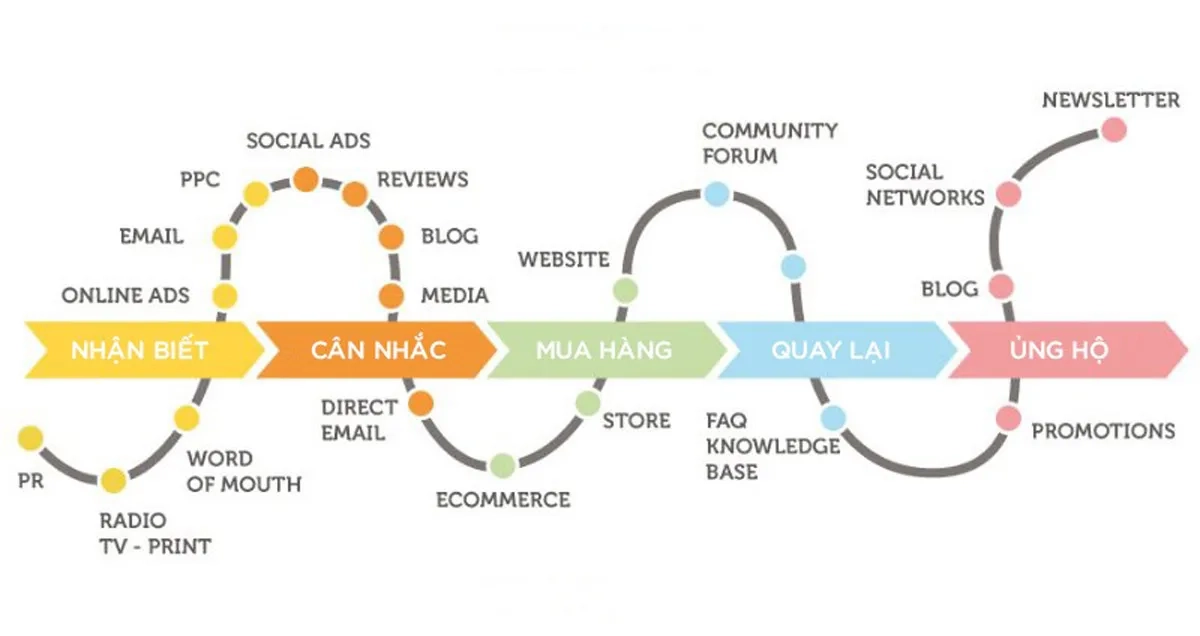
The customer journey (also called the customer experience journey) refers to the complete sum of experiences a customer has with a brand — from the very first moment they discover your product or service, through consideration, purchase, product use, and beyond.
This journey plays a critical role in shaping how customers perceive your brand and how they ultimately decide to buy from you (or not).
At every stage, there are multiple touchpoints — moments of interaction across different channels and devices. Businesses that understand and optimize each of these touchpoints achieve significantly higher conversion rates than those that don't.
Why Does Your Business Need to Understand the Customer Journey?
Your customers are the center of everything you do. Without understanding where they are in their journey, even the best marketing strategies lose their edge.
Here's what a deep understanding of the customer journey actually gives you:
Better Marketing ROI and Budget Allocation
When you know exactly which channels drive awareness and which ones drive conversions, you stop wasting budget on the wrong touchpoints and double down on what's working.
Higher Conversion Rates
Every stage of the journey has its own friction points. When you can identify where customers are dropping off, you can fix the specific bottleneck — whether that's a lack of comparison content, missing case studies, or a slow response time.
Personalized Customer Experiences
Different customers come with different needs and motivations. A personalized journey allows your brand to deliver the right message to the right person at the right time — making customers feel genuinely understood, not just marketed to.
Data-Driven Decisions Over Gut Feel
Building a customer journey forces you to pull in real data — from your website, CRM, social channels, and customer service systems. This reduces guesswork and increases the accuracy of every business decision you make.
Ultimately, understanding the customer journey doesn't just help you sell more — it helps you build a sustainable growth engine where marketing, sales, and customer care all work in alignment.
The Key Stages of the Customer Journey
While every business has a unique journey depending on its product, audience, and industry, most customer journeys follow these core stages:
Awareness
This is the moment a customer first recognizes they have a problem or need — and begins looking for a solution. They discover your brand through search engines, social media, ads, blog content, or word of mouth.
First impressions matter enormously here. A strong, positive initial encounter builds curiosity and draws the customer deeper into the journey. Content at this stage should be educational, informative, and focused on helping customers understand their own pain points.
Consideration
Having become aware of your brand, the customer now enters a phase of active evaluation. They're comparing your solution against alternatives, reading reviews, analyzing pricing, and engaging with your sales or support team.
At this stage, your job is to build trust, provide in-depth information, and stay visible across the right touchpoints. The goal is to be the most memorable and credible option when the customer is ready to decide.
Conversion (Decision)
This is the moment of truth. The customer decides whether to commit to your brand or walk away. Factors like perceived value, pricing, customer service quality, and the overall buying experience all influence the outcome.
A frictionless checkout process, responsive support, and clear communication at this stage can make the difference between a closed deal and an abandoned cart.
Retention
After the purchase, the journey continues. This stage determines whether a customer becomes a loyal, repeat buyer — or a one-time transaction.
If the product delivers on its promise and the post-purchase experience is strong, customers return. They may even become advocates who recommend your brand to others, generating zero-cost word-of-mouth growth.
Focus here on personalized follow-ups, loyalty offers, and consistent communication that keeps your brand top of mind with a positive association.
Advocacy
The final stage — and the most valuable. An advocate has had such a positive end-to-end experience that they actively promote your brand. They leave reviews, share content, refer friends, and defend your brand online and offline.
Reaching this stage means you've built a connection that goes beyond the product. You've built brand loyalty.
Common Customer Journey Models
Depending on your business type, audience, and product, different frameworks may apply:
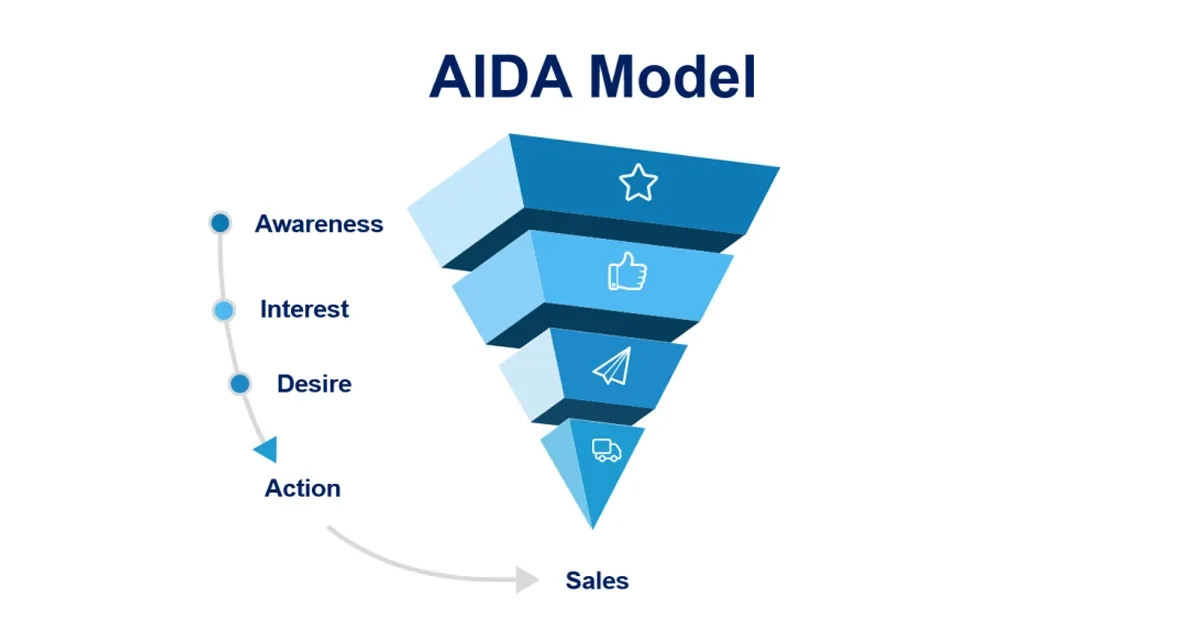
AIDA (Attention, Interest, Desire, Action)
A classic marketing model that maps the psychological path from first awareness to purchase action:
- Attention — Capture the prospect's awareness
- Interest — Spark genuine curiosity with relevant content
- Desire — Create an emotional want for the product or service
- Action — Drive the purchase decision
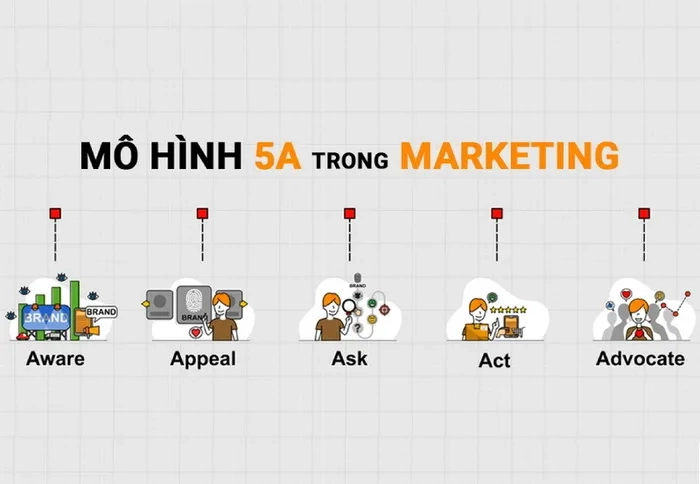
5A Model (Aware, Appeal, Ask, Act, Advocate)
An evolution of AIDA that reflects modern digital behavior — including post-purchase sharing and word-of-mouth:
- Aware — Initial brand discovery
- Appeal — Emotional pull toward the brand
- Ask — Active research and review-reading
- Act — Purchase decision
- Advocate — Sharing and recommending
This model is especially relevant for brands where social proof and peer recommendations play a major role in the buying process.
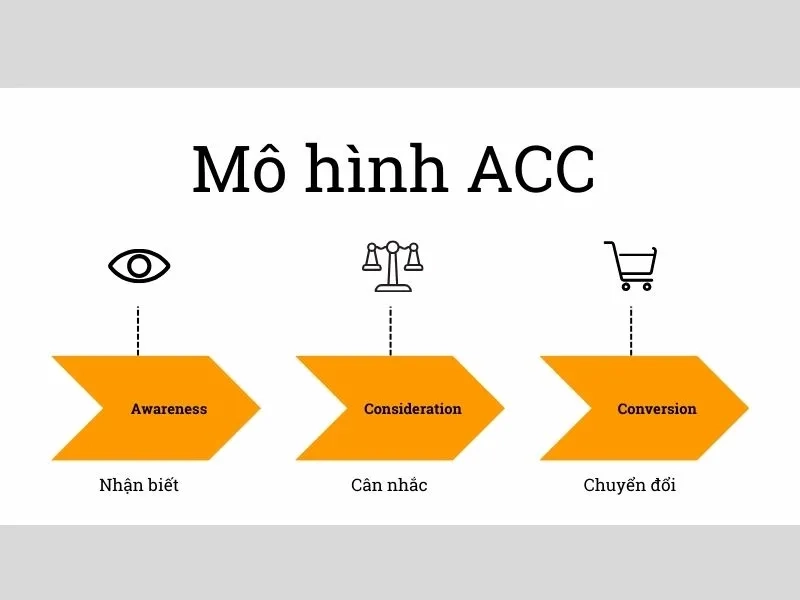
ACC Model (Awareness, Consideration, Conversion)
A streamlined three-stage model suited for businesses with simpler, faster sales cycles. Each stage is distinct but directly connected to the next, making it easy to track and optimize.
How to Build and Optimize an Effective Customer Journey
Step 1: Define Your Target Customer
Every effective customer journey starts with a precise customer profile. Analyze demographics, behaviors, preferences, pain points, and motivations.
For B2B businesses, go deeper: understand the company size, the decision-maker's role, and the specific operational problems they're trying to solve. A well-defined customer persona makes every downstream strategy sharper.
Step 2: Analyze Customer Data and Behavior
Once you have your customer profile, dig into the data. Where are they coming from? How do they interact with your brand? What does their typical path to purchase look like?
Draw from website analytics, CRM records, social media insights, and customer service data. This forms the factual foundation your journey map is built on.
Step 3: Map Out the Journey Stages
Based on behavioral data, divide the journey into clear stages — awareness, consideration, decision, post-purchase. Each stage should have defined goals, key customer questions, and relevant content or interaction types.
Step 4: Identify Touchpoints
At each stage, identify every point of contact between your customer and your brand: social media channels, your website, physical stores, sales conversations, online reviews, display advertising, email sequences, and more.
Understanding which touchpoints matter most at each stage allows you to invest the right resources in the right places.
Step 5: Build the Journey Map
Create a visual representation of the entire journey — showing stages, touchpoints, and key customer behaviors side by side. This map becomes a shared reference tool for your marketing, sales, and customer care teams to align around.
It also makes gaps and opportunities immediately visible.
Step 6: Measure Performance
Track the journey continuously using metrics like conversion rates, drop-off rates, time to decision, and channel-level performance. Without measurement, optimization is just guesswork.
Step 7: Optimize Based on Real Data
A customer journey isn't built once and left to run. It's a living framework that improves with every iteration. Identify what's holding customers back at each stage, test solutions, and refine based on what the data tells you — not what you assume.
To measure and optimize effectively, consolidating all customer data into one unified platform is essential. CRM solutions like SaleSmartly make this possible by capturing every interaction, conversation, and touchpoint from every channel in one place.
How SaleSmartly Helps You Optimize the Customer Journey
SaleSmartly stores the complete interaction history of every customer across every channel — Facebook, Instagram, Zalo, TikTok, website, email, and more. From first contact to post-purchase follow-up, every data point is captured and accessible.
With centralized data from SaleSmartly, your team can:
- Track full customer interaction history across all channels
- Measure engagement levels and customer satisfaction at every stage
- Segment customers by behavior, characteristics, and journey stage for personalized experiences
- Continuously optimize based on real-world data
- Improve customer service quality through performance reporting
- Automate customer care workflows at scale
- Sync data across marketing, sales, and support teams in real time
Conclusion
The customer journey is no longer just a marketing concept — it's the operational backbone of modern sales, marketing, and customer care.
When businesses truly understand where their customers are, what they need, and how they engage at every stage, every activity becomes more precise, more relevant, and more effective.
But in a multi-channel world, manual processes simply can't keep up. That's where solutions like SaleSmartly become essential — enabling businesses to track the entire journey, manage conversations in one place, and personalize every experience based on real data.
Ready to see your customer journey more clearly?
Prevent Customer Loss When Your Sales Rep Leaves the Company
A 12-person Hai Phong machinery exporter can lose 30-50 active accounts in a single resignation. Here is how WhatsApp Business API, plus a unified inbox, turns personal numbers into company assets.
Top 5 Customer Service Chatbots for Businesses in 2026
Discover the top 5 customer service chatbot platforms in 2026. Automate support, improve response times, and enhance customer engagement with the right chatbot solution.
