Promotional Message Templates: 12 Ready-To-Use Examples For Every Campaign Type
The difference between a promo message that gets read and one that gets deleted usually comes down to the first five words. Marketing teams that send hundreds of campaigns a year learn quickly that great copywriting is not what makes a promo work at scale, but a proven structure that gets adapted for each occasion.
How Do Promotional Messages Actually Work?
Promotional messages are short, one-way marketing notifications sent via SMS, email, or messaging apps that announce a discount, offer, event, or product launch to a targeted list of customers, with the goal of driving immediate action.
The mechanics that make a promo message convert:
- Fast recognition: Customers scan the sender name and first line in under two seconds and decide whether to keep reading.
- Clear offer: The specific benefit (dollar amount off, percentage discount, freebie) needs to appear before any brand storytelling.
- Direct call to action: A single, unambiguous action (tap the link, use the code, visit the store) increases conversion far more than a menu of options.
- Urgency mechanism: A deadline, quantity limit, or exclusivity marker gives customers a reason to act now instead of later.
Templates below follow this structure so your team can adapt the words while keeping the mechanics intact.
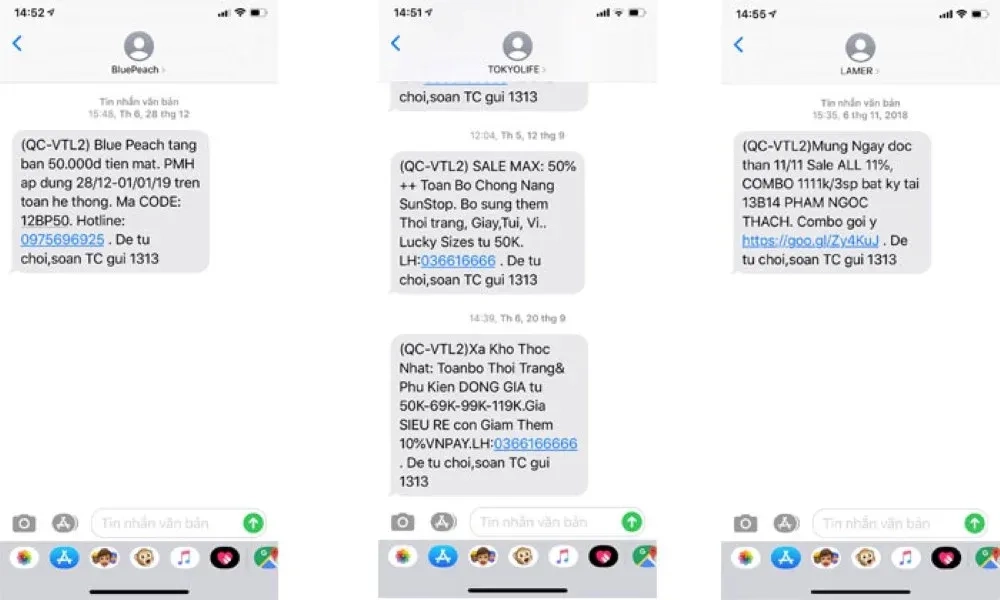
Flash Sale And Limited-Time Discount Templates
Flash sale messages work when the discount is aggressive and the deadline is short enough to force a decision. Use these when running 24-72 hour promotional windows.
Template 1: Percentage-Off Flash Sale
Brand
FLASH SALE:
X
% off everything, today only. Shop before midnight:
link
. Reply STOP to opt out.
Template 2: Dollar-Amount Discount With Threshold
Save $
X
on orders over $
Y
this weekend at
Brand
. Use code
CODE
at checkout:
link
. Ends Sunday 11:59 PM.
Template 3: Category-Specific Flash Sale
One day only:
X
% off all
category, e.g., outerwear
at
Brand
. Shop the sale:
link
. Ends midnight tonight.
Each template keeps the discount, the deadline, and the link visible in the first sentence, so customers who skim still catch the offer.
Birthday And Anniversary Templates
Personalized birthday messages have some of the highest open and click rates of any campaign type because they arrive with clear individual relevance. Keep the tone warm but the offer specific.
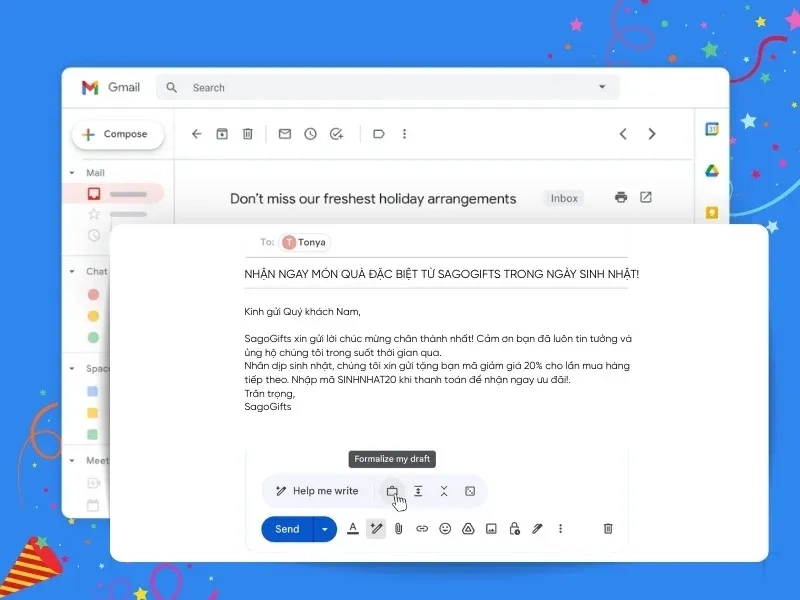
Template 4: Simple Birthday Discount
Happy birthday,
First Name
!
Brand
is treating you to
X
% off anything you love this month. Use code BIRTHDAY
X
at checkout:
link
. Cheers to your year ahead.
Template 5: Free Gift Birthday
[First Name], it is your birthday month, and
Brand
wants to celebrate. Add anything to your cart at
link
and get a free
gift item
added at checkout, no code needed. Valid through
last day of month
.
Personalization with the customer's name and a month-long redemption window drives higher conversion than day-of-only offers, because customers who see the message on a busy birthday still have time to redeem later.
VIP And Loyalty Reward Templates
Loyalty message templates work when they make VIP customers feel recognized as different from your general list. Language matters: use words like "exclusive," "member-only," and "early access" rather than generic promo copy.
Template 6: VIP Early Access
First Name
, as a VIP member, you get 24-hour early access to our new
collection/product line
before it opens to everyone else. Shop now:
link
. Ends tomorrow at midnight when public access begins.
Template 7: Loyalty Points Redemption Reminder
First Name
, you have
X
loyalty points ready to spend at
Brand
, worth $
Y
in savings. Redeem before they expire on
date
:
link
.
For deeper thank-you messaging beyond promotional context, customer appreciation message templates work better than promo templates because they focus on gratitude first and offer second, which fits the loyalty stage of the customer relationship.
Product Launch And New Arrival Templates
Product launch messages create anticipation for something new. The template needs to communicate what is new, why it matters, and how to get first access, all in the first two lines.
Template 8: New Product Launch With Discount
Just launched:
Brand
introduces
new product name
. Get
X
% off for the first 100 orders:
link
. Available today at 10 AM PT.
Template 9: Restock Alert For Sold-Out Item
Back in stock, and going fast:
product name
returned to
Brand
this morning. Shop before it sells out again:
link
.
Restock messages have particularly high conversion because they target customers who already showed interest by trying to buy the item when it was unavailable.
Cart Abandonment Recovery Templates
Cart recovery messages work best when they arrive within a specific window: 1-4 hours after abandonment for the first message, 24 hours for the second, 3 days for a final incentive-based nudge.
Template 10: First Cart Reminder (Soft Nudge)
First Name
, you left something in your cart at
Brand
. Complete your order here:
link
. We saved it for you.
Template 11: Second Cart Reminder With Incentive
Still thinking it over,
First Name
? Get
X
% off if you complete your
Brand
order in the next 24 hours. Use code SAVE
X
:
link
.
Template 12: Final Cart Recovery With Urgency
Last chance: your
Brand
cart expires in 24 hours. Complete your order and save
X
%:
link
. Code SAVE
X
at checkout.
Escalating urgency and adding incentive at the second and third message drives significantly higher recovery rates than sending the same reminder three times.
Rules For Writing Promo Messages That Convert
Templates are the starting point. What separates high-conversion campaigns from average ones comes down to how your team adapts each template for the specific offer and audience.
Keep Character Count Tight
- SMS: Aim for under 160 characters per segment to avoid multi-segment billing.
- Push notifications: Keep under 65 characters for the title and 240 for the body so nothing gets truncated on mobile.
- Email subject lines: Stay under 50 characters to display fully on mobile inboxes.
Put The Offer Before The Story
Marketing teams sometimes lead with brand voice before mentioning the offer, but this reduces conversion because customers scan for value first. Structure every promo message as: offer → deadline → link → brand voice, in that order.
Test Send Times Instead Of Guessing
Every audience has different peak engagement windows. Rather than assuming Tuesday morning is universally best, run 3-4 send-time tests over 2 weeks with the same offer, then anchor your future sends around what actually worked for your list.
Include A Clear Opt-Out Path
- SMS: Include "Reply STOP to opt out" in every commercial message. This is required by TCPA in the US and equivalent regulations in most markets.
- Email: Every promotional email needs an unsubscribe link visible without scrolling, per CAN-SPAM and GDPR requirements.
- Messaging apps: Include a way for customers to opt out of future messages, either through the platform's native controls or a reply keyword.
Match Channel To Message Type
- Urgent, short offers (flash sales, restocks): SMS or push notifications for fastest delivery.
- Rich content offers (product launches, seasonal campaigns): Email or messaging apps that support images and formatted text.
- Personalized loyalty offers: Channels where your team can reference customer history (typically CRM-connected email or messaging platforms).
For rich-content campaigns that need images, structured offers, or personalized fields, email marketing platforms provide better formatting and segmentation than SMS-only tools, though the trade-off is lower open rates than instant messaging channels.
How To Adapt Templates For Your Brand Voice
Templates give your team the structural bones. Making them sound like your brand takes three specific adjustments:
- Match your existing tone: If your marketing usually reads casual and playful, do not send a promo template that sounds corporate. Read the template aloud alongside your last three campaigns and adjust word choice until they sound like they came from the same brand.
- Use words your customers use: Templates written for general audiences use generic terms like "offer" and "discount." Your specific customers may respond better to "deal," "special," "sale," or industry-specific language.
- Localize for your market: If your brand serves customers in multiple countries, direct English translation of templates written for one market often fails in another. Adjust cultural references, price formats, and time zone assumptions per market.
Common Mistakes That Kill Promotional Message Performance
Even well-written templates fail when execution is sloppy. Marketing teams that send promotional messages at scale usually run into the same five mistakes:
- Sending to unsegmented lists: Blasting every message to your entire list drains engagement and increases opt-out rates. Segment by purchase history, engagement level, or geography to make each message feel relevant.
- Ignoring send-time context: A promo message arriving at 3 AM the customer's local time will be ignored or actively resented. Schedule based on the recipient's time zone, not your headquarters time zone.
- Overusing urgency language: Every message marked "URGENT" or "LAST CHANCE" trains customers to ignore the urgency signal. Reserve those phrases for genuinely time-limited offers.
- Neglecting to test the link: Sending a promo message with a broken or wrong-page link wastes the entire campaign. Test the link on both desktop and mobile before hitting send on any campaign.
- Forgetting the reply handling: Every promo generates customer replies asking questions about the offer. Teams without a plan for handling those replies lose incremental sales that could have been closed by a simple response.
Where Templates Break Down In Multi-Channel Campaigns
Marketing teams that write great promotional templates often hit an execution wall the moment those templates leave the design doc. The same offer gets sent through SMS, email, Messenger, and WhatsApp using four different tools, and by the time results come back, comparing what actually worked becomes guesswork. Marketing teams sending promotional campaigns across multiple channels typically run into three specific problems that dilute template performance:
- Inconsistent messaging across channels: The SMS version says one thing, the email version says another, and the WhatsApp version drifts further because each channel is edited in a separate tool with its own team.
- Reply traffic falls to a different team: Marketing sends the promo, but replies land with customer service, who often have no visibility into which campaign the customer is responding to.
- No unified view of template performance: Response rates, reply sentiment, and conversion by channel sit in separate dashboards, making it hard to answer which template variation actually converted best.
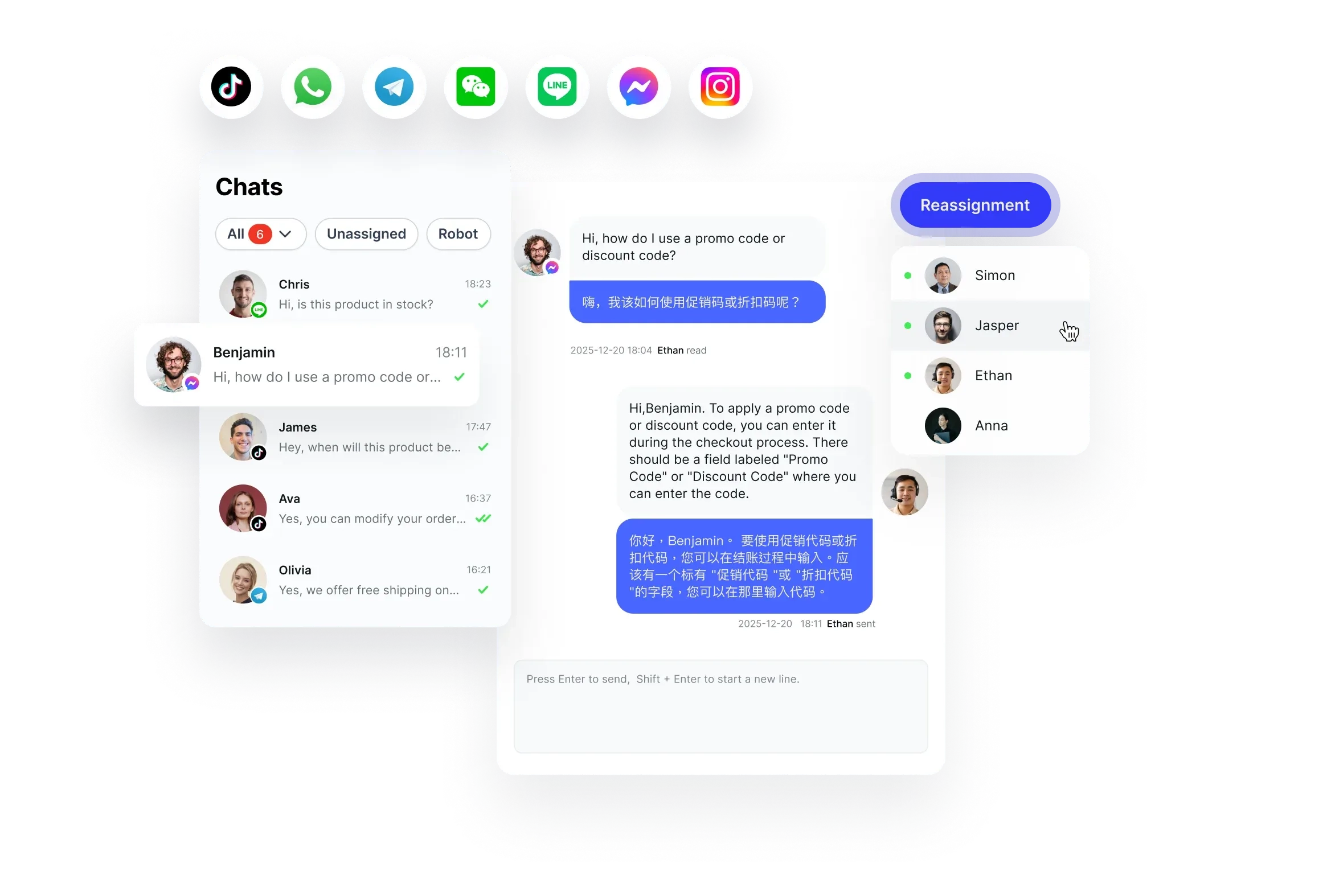
Explore SaleSmartly to keep template execution consistent across Zalo, Facebook, Instagram, WhatsApp, TikTok, Telegram, email, and live chat, with every inbound reply automatically routed to the same conversation thread as the original send.
Conclusion
Great promotional messages are less about clever copy and more about disciplined execution: a clear offer up front, a deadline that means something, a link that works, and a plan for handling the responses your campaign generates. Templates like the twelve above give your team a starting point that already handles the mechanics, but the real gains come from adapting each one to your brand voice, testing what actually resonates with your specific audience, and closing the loop on the reply traffic every campaign produces.
What Is SMS Brandname? Vietnam Registration, Cost Structure, And How It Compares To ZNS
What is SMS Brandname? Understand branded SMS in Vietnam, cost structure, registration process with carriers, and how it compares to Zalo ZNS.
What Is Email Marketing? ROI, Types, And How To Start Building An Owned Channel
What is email marketing? Learn how it works, why ROI beats other channels, common email types, platforms, and open rate benchmarks for teams starting out.
