Online Customer Service Strategies For Omnichannel Teams
Key Takeaways
- Effective online customer service requires a dedicated strategy for each channel, since every platform (Zalo, Facebook Messenger, Instagram, live chat) has different interaction behaviors and response time expectations.
- First-response speed is the defining factor of customer experience on chat channels, with average expectations under 5 minutes on live chat and under 1 hour on social media according to Zendesk CX Trends.
- Omnichannel customer service teams need a unified conversation platform to avoid fragmented data, reduce time switching between apps, and ensure customers do not have to repeat their issue when changing channels.
Every day, your online shop receives messages on Zalo, comments on Facebook, DMs on Instagram, and questions through your website's live chat. If your team is constantly switching between apps and occasionally missing messages, customers will notice the inconsistency.
So how do you run customer service effectively across multiple channels at the same time? This article shares practical online customer service strategies, step-by-step workflows, and tools suited for omnichannel shops in Vietnam.
Popular Online Customer Service Channels In Vietnam
Online customer service in Vietnam currently takes place across six main channels. Each channel suits a different customer group and communication purpose, so understanding the characteristics of each helps you allocate resources effectively.
| Channel | Primary Users | Communication Style | Response Time Expectation |
|---|---|---|---|
| Zalo | Broad demographics, all ages | 1-on-1 messaging, trusted platform | Under 30 minutes |
| Facebook Messenger | Online shoppers, younger demographics | Quick chat, comment-to-inbox | Under 30 minutes |
| Instagram DM | Gen Z, visual product shoppers | Short messages, story replies | Under 1 hour |
| Live chat (website) | Website visitors evaluating products | Real-time, detailed inquiries | Under 5 minutes |
| B2B customers, formal requests | Detailed, documented communication | 4-24 hours | |
| International customers, cross-border | Messaging with media attachments | Under 1 hour |
Most online shop customer service teams in Vietnam operate across 3-4 channels simultaneously. As a result, the main challenge lies in maintaining consistent response quality across all channels. When a customer messages on Zalo in the morning and then switches to Messenger in the afternoon, your team needs to see the full customer journey to continue support without the customer having to repeat their issue.
Online Customer Service Strategies For Omnichannel Shops
Effective online customer service starts with establishing clear processes for each stage of interaction. Below are seven actionable strategies that online shop customer service teams in Vietnam can implement immediately.
Set Standard Response Times For Each Channel
Customers on live chat expect a response within 5 minutes, while email can tolerate 4-24 hours. If your team responds to Zalo within 2 minutes but leaves Instagram DMs waiting for 3 hours, the experience across the two channels will be completely different.
Your team should create a response time commitment table for each channel and pin it in the internal group chat:
- Live chat: Under 5 minutes
- Zalo and Messenger: Under 30 minutes
- Instagram DM: Under 1 hour
- Email: Under 4 hours
During peak hours, prioritize channels with the shortest response time expectations first. Additionally, if your team does not have enough staff to cover all channels simultaneously, set up automated reminder messages notifying customers of the estimated response time on secondary channels.
Automate Welcome Messages And Request Classification
When a shop receives hundreds of messages daily, staff spend significant time sorting, which are price inquiries, which are complaints, and which are order status checks. Automating this first step reduces the workload considerably.
Set up a chatbot with quick-select menus on Zalo and Messenger:
- When a customer messages, the bot displays 3-4 options ("Product inquiry," "Check order status," "Return/complaint," "Other")
- Based on the response, the bot routes the request to the right agent or team
- Platforms like SaleSmartly support setting up multi-model AI chatbots (ChatGPT, DeepSeek, Coze) across all chat channels
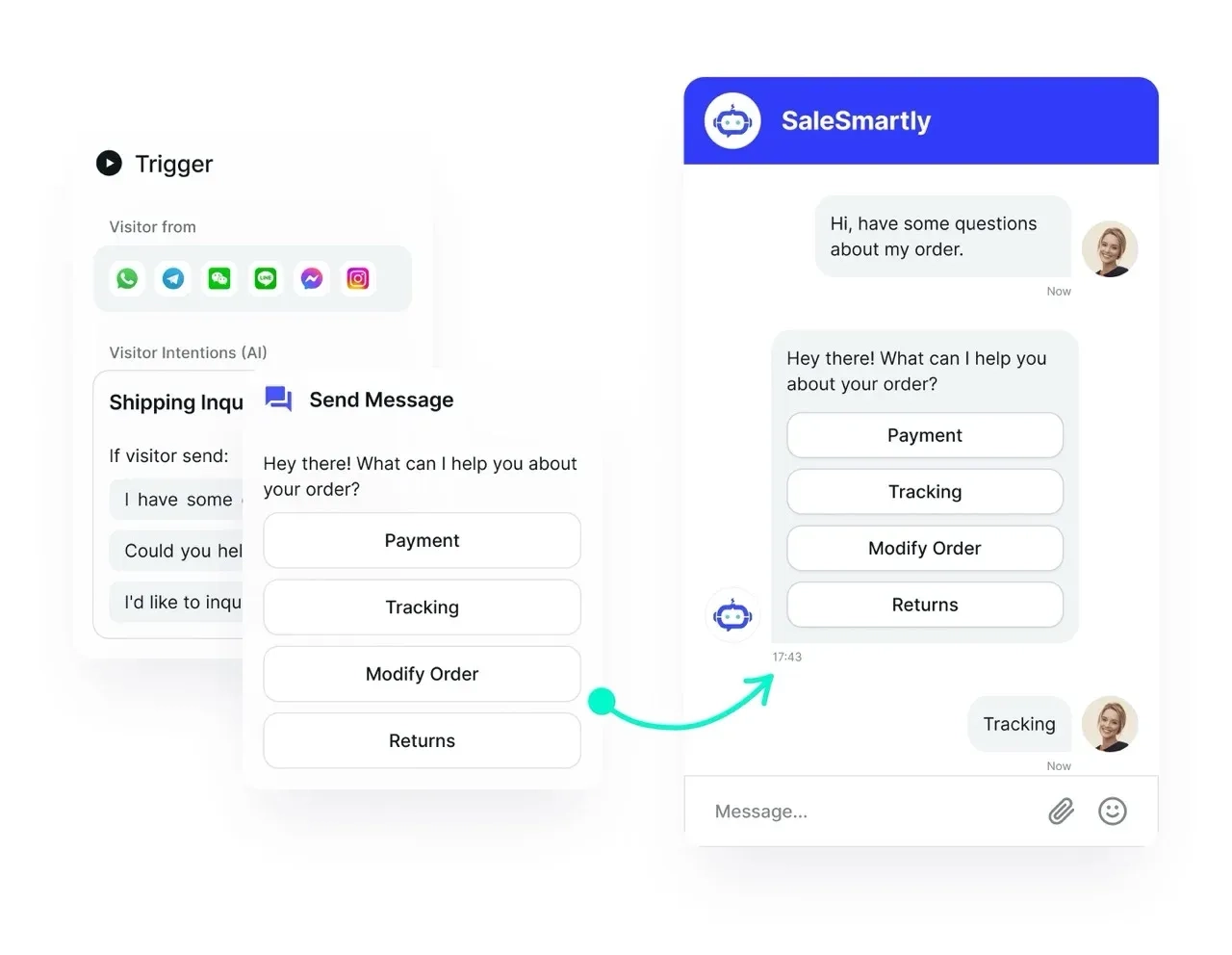
That said, chatbots handle scripted questions well. For complex requests (defective product complaints, refund requests), your team needs to establish a bot-to-agent handoff process within 30 seconds.
Personalize Conversations Based On Interaction History
When agents know what a customer previously purchased and what they asked about before, the conversation becomes much more natural. At the same time, customers feel genuinely cared for instead of having to reintroduce themselves every time they reach out.
After each conversation, agents should:
- Tag customers by group: New customer, repeat buyer, VIP, previous complaint
- Add brief notes to the profile: Products purchased, issues resolved, personal preferences
- Read notes before responding next time: Address customers by name and reference previous context
However, effective personalization requires customer data from all channels to be recorded in one place. If Zalo chat history stays on Zalo and Messenger history stays on Facebook, agents cannot connect the information. For this reason, omnichannel customer service teams need a system that unifies conversation history into a single customer profile.
Match Response Tone To Each Channel
The way you serve customers on Zalo or Messenger can differ from email. Chat on social media should be concise (2-3 sentences per message), friendly, and can include appropriate emojis. In contrast, email requires complete information, professional tone, a proper greeting, and a sign-off.
Your team should build separate message templates for each channel:
- On chat: Templates with 1-2 direct response sentences plus a confirmation question
- On email: Templates with a greeting, detailed content, and closing
- Reference: A set of customer service scripts suited for common scenarios
To build appropriate templates, your team also needs solid foundational customer service skills in listening, problem-solving, and situation handling. Message templates serve as a starting point for quick responses, but agents should always add the customer's name and specific details before sending.
Follow Up After Resolution And Provide Post-Sale Care
Many shops stop at resolving the issue and forget to follow up afterward. In practice, reaching back out to customers 24-48 hours later to confirm everything was resolved demonstrates care and professionalism.
After handling a complaint, the team sets a reminder in the system to follow up within 1-2 days using a template message.
Beyond complaint follow-ups, sending a message asking about the usage experience 3-5 days after purchase also helps increase repeat purchase rates. You can reference promotional message templates to combine post-sale care with exclusive offers for returning customers.
Measure Customer Service Performance By Channel
Measuring a single metric across all channels makes it impossible to identify which channel has issues. Analyzing each channel separately helps pinpoint exactly what needs improvement.
Your customer service team should track three core metrics per channel on a weekly basis:
- Average response time: Compare against committed benchmarks to identify which channels are falling behind
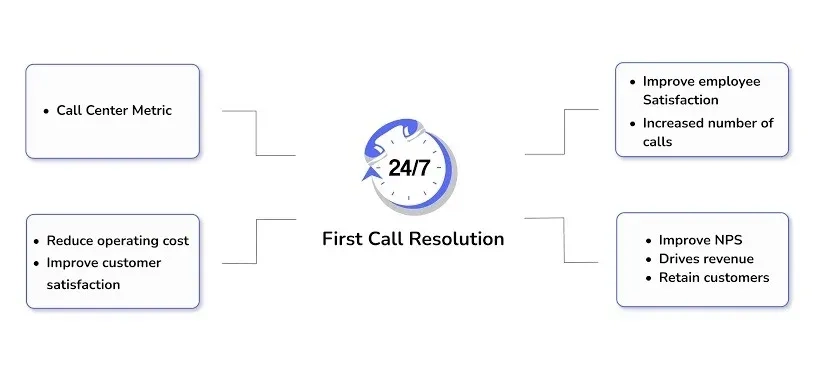
- First contact resolution rate (FCR): A high rate indicates effective handling, while a low rate signals a need for additional training
- Conversations handled per agent: Helps allocate shifts appropriately and identify overload
Unified conversation platforms like SaleSmartly provide performance analytics dashboards by channel, by agent, and by shift. This enables your team to manage customer service effectively even at a smaller scale.
Collect Customer Feedback After Every Conversation
Customers are willing to share their opinions if you ask at the right time and in the right way. Collecting feedback after conversations helps your team identify what is working well and what needs improvement.
Send a short survey (1-2 questions) immediately after closing the conversation. Then analyze results weekly by channel and by agent. For customers who select "Not satisfied," follow up within 24 hours to understand the specific reason.
Common Failures New Shops Make In Online Customer Service
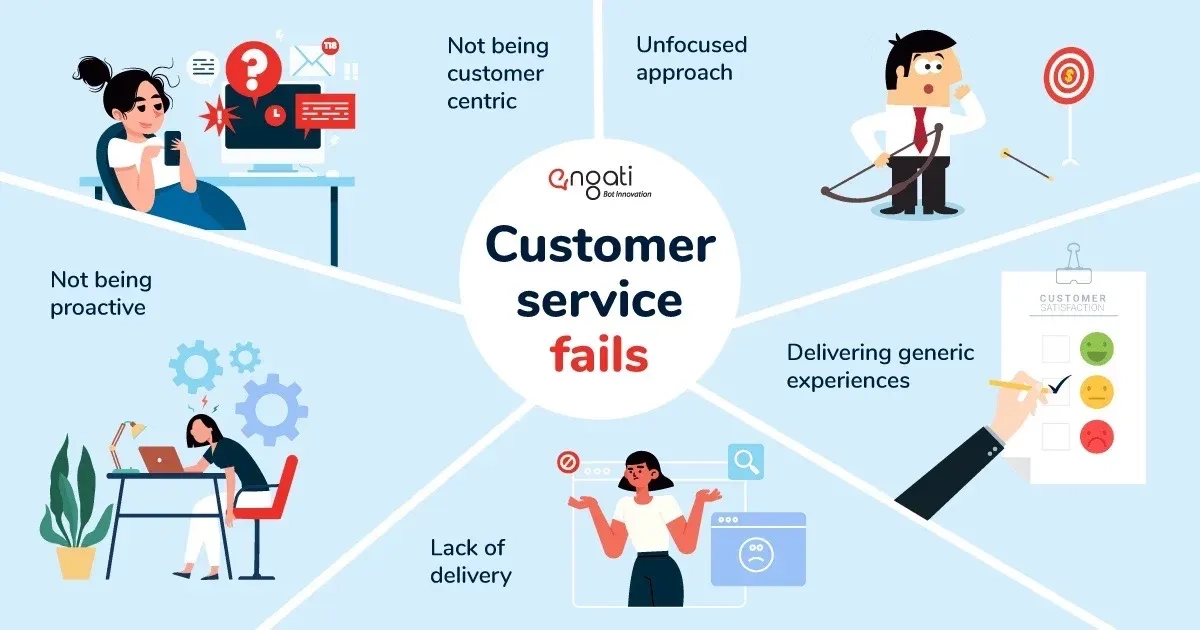
New online shops commonly encounter five mistakes in online customer service, especially when the team is small and processes are not yet established:
- Focusing on one channel while neglecting others: Many shops respond to Messenger very quickly but leave Instagram DM or Zalo waiting for hours. Customers on the neglected channel will switch to a competitor with faster responses.
- Using the same tone across every channel: Answering chat messages with long email-style paragraphs, or conversely, responding to emails too briefly when customers need detailed information.
- Over-relying on chatbots: Chatbots handle simple questions effectively, but complex issues require timely human intervention. Without a clear bot-to-agent handoff process, customers lose patience.
- Lacking cross-channel conversation history: A customer asks on Zalo in the morning, switches to Messenger in the afternoon, and has to retell the entire story. When conversation history from all channels is recorded in one place, any agent can continue providing customer service via Zalo or any other channel without the customer having to explain again.
- No per-channel measurement: New shops should start by tracking at least average response time and the number of unanswered messages per channel daily.
Conclusion
Effective online customer service starts with standardizing your service process on the channel with the highest interaction volume before expanding to new channels. Choose your shop's primary channel, build a clear workflow from intake through post-resolution follow-up, and train your team to operate it for 2-3 weeks. Once the process is stable, add the next channel with the same service standards.
FAQs
What Is The Best Way To Provide Online Customer Service?
Set standard response times for each channel, train your team to personalize communication based on interaction history, and measure service performance weekly. The most important factor is ensuring customers receive fast and consistent responses regardless of which channel they use.
How Do You Provide Customer Service Over The Phone?
Prepare customer information before calling, open with the customer's name and a clear purpose, listen before offering solutions, and log the conversation details in the system. An effective customer service call typically stays within 5-7 minutes and ends with a specific next-step confirmation.
What Is Customer Service?
Customer service encompasses all activities involved in supporting, advising, and maintaining relationships with customers before, during, and after purchase. The goal is to help customers resolve issues, improve satisfaction, and build long-term loyalty.
What Are The 6 Steps Of Customer Service?
The six basic steps include receiving the request, listening and identifying the issue, proposing an appropriate solution, executing the solution, confirming the outcome with the customer, and following up after resolution. Each step should be logged in the system so the team can track progress throughout.
Zalo CRM: How To Connect Zalo With CRM And Choose The Right Fit
Zalo CRM is a customer management solution integrated with Zalo OA. Learn how to connect Zalo with CRM, compare platforms, and choose the right fit for B2B teams.
AI Chatbot: How It Works, Benefits And How To Deploy
An AI chatbot uses artificial intelligence to understand context and respond to customers flexibly. Learn about NLP, LLM, RAG technology and deployment strategies.
