How To Improve Customer Service Efficiency For B2B Teams
Key Takeaways
- Solutions to improve customer service efficiency for B2B teams in Vietnam rest on five pillars: unifying communication channels, automating responses with AI chatbots, standardizing request-handling processes, managing customer data from conversations, and measuring performance through CSAT, NPS, and FCR.
- Viettel Customer Service increased productivity by 30% and reduced complaint rates by 20% by applying technology to customer service operations, becoming the first Vietnamese organization to receive the ICXA 2025 award.
- Each type of customer service solution (conversational CRM, AI chatbot, omnichannel live chat, virtual call center) suits a different scale and operational need. Teams should identify their biggest bottleneck before choosing a tool.
Your customer service team is expanding communication channels (Zalo, Facebook Messenger, Instagram, email, live chat), but the request-handling process has stayed the same since you only had one channel. The result is missed messages, longer response times, and customer data scattered across separate apps.
This article analyzes five solutions to improve customer service efficiency that B2B teams in Vietnam can apply — spanning technology and process — along with a comparison table of customer service solution types matched to specific needs.
Why Do B2B Teams Need Effective Customer Service Solutions?
B2B teams in Vietnam need effective customer service solutions because customers now communicate through multiple channels simultaneously, while internal processes have not kept pace with that expansion. When the number of channels grows but the team still handles everything manually, three problems typically surface.
- First, agents constantly switch between Zalo, Messenger, email, and live chat within a single shift, leading to slow responses and missed requests.
- Second, customer data lives on personal phones or inside individual apps, making it difficult for the team to track interaction history when a customer contacts them again.
- Third, team leads lack measurement data to evaluate each agent's performance and each channel's contribution.
As a result, individual agent skills only deliver results when supported by the right systems and processes. The five solutions below help your team address all three problems.
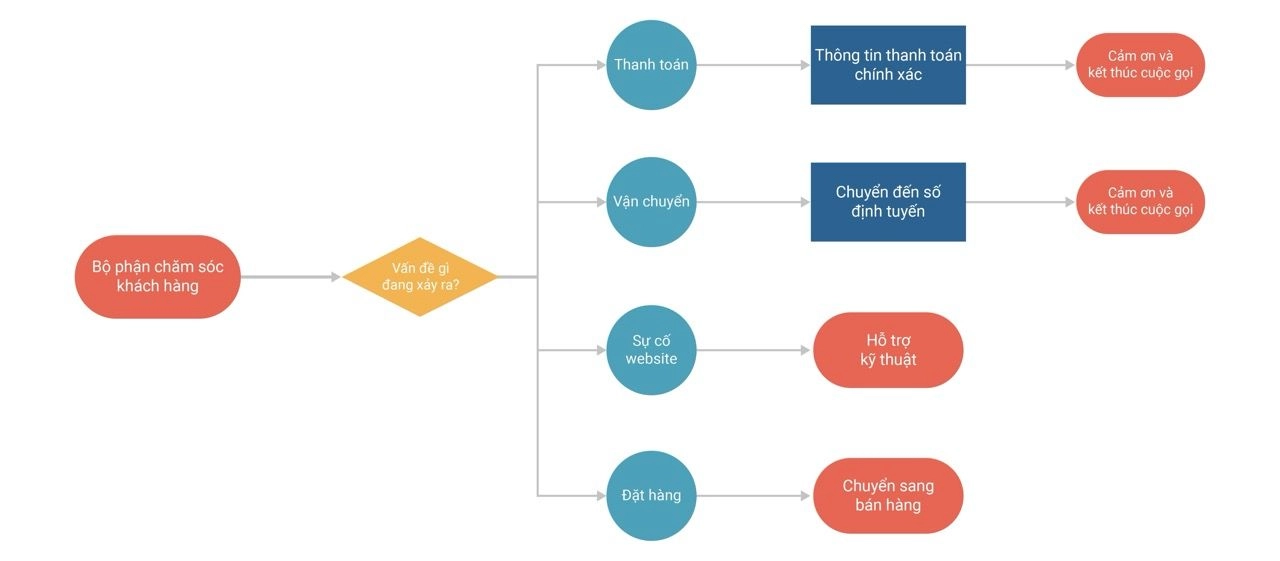
What Are The Solutions To Improve Customer Service Efficiency For B2B Teams?
The solutions to improve customer service efficiency for B2B teams in Vietnam include unifying communication channels, automating responses with AI chatbots, standardizing request-handling processes, managing customer data from conversations, and measuring performance through data. Each solution addresses a specific bottleneck in daily customer service operations.
Unify Communication Channels Into One Platform
Customer service teams in Vietnam typically operate simultaneously across Zalo, Facebook Messenger, Instagram, email, and website live chat. When each channel runs on a separate app, agents waste time switching tabs, easily miss messages, and deliver inconsistent responses across channels.
An omnichannel customer service solution consolidates all conversations into a single interface. Agents see messages from every channel on one screen and respond immediately without opening each app individually. On top of that, the system automatically assigns conversations based on shift schedules or specialized teams.
Automate Responses With AI Chatbots
Customers in Vietnam expect a reply within minutes when messaging through Zalo or Messenger. However, your customer service team is limited by shift hours and headcount per shift. That is why AI chatbots help teams respond automatically to frequently asked questions outside business hours and during peak periods.
An effective AI chatbot deployment strategy for B2B teams in Vietnam involves three steps. First, identify the 10-15 most repeated questions (pricing, policies, delivery timelines) and set up a script-based chatbot to handle this group. Next, connect the AI chatbot to your product and policy data so it can address open-ended questions. Finally, configure transfer points to a human agent when requests exceed the bot's capabilities.
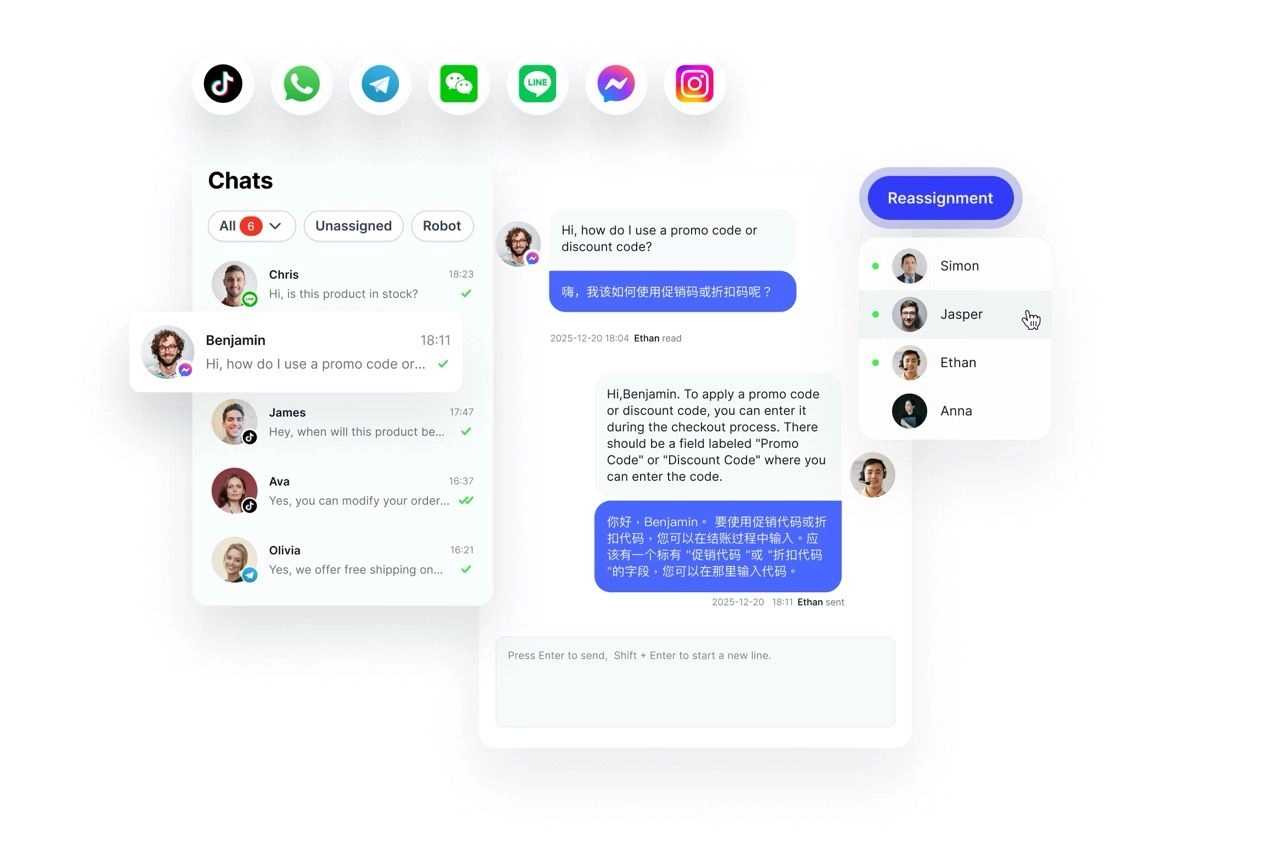
Standardize The Request Intake And Handling Process
When multiple agents handle requests across multiple channels, each person may respond differently if the process has not been standardized. This leads to uneven service quality and customers receiving conflicting information from the same team.
A standardized customer service process for B2B teams in Vietnam typically involves five sequential steps:
- Intake and classification: The system automatically tags requests by type (pricing, returns, complaints, consultation) as soon as the customer sends a message.
- Agent assignment: Requests are routed to the on-shift agent or the appropriate specialized team based on the request type and contact channel.
- Script-based handling: Agents respond using approved service scripts to ensure consistent information.
- Tracking and updating: Processing status is logged (in progress, completed, needs cross-department coordination) so team leads can monitor progress.
- Ticket closure and feedback collection: After completion, send a thank-you message to the customer along with a short satisfaction survey.
Manage Customer Data From Conversations
Most customer data for B2B teams in Vietnam originates from conversations on Zalo and Messenger — names, phone numbers, needs, purchase history, and feedback. However, this data typically lives on agents' personal phones or inside individual chat apps.
An effective customer service solution needs to include a module for managing customer data from conversations. The system records contact information, applies classification tags, saves internal notes, and builds customer profiles from interaction history across all channels. As a result, when an agent leaves the company, all data remains on the system and a new agent picks up seamlessly without disrupting the customer experience.
Measure Customer Service Effectiveness With Data
Team leads need data to evaluate team performance and identify areas for improvement. Viettel Customer Service increased productivity by 30% and reduced complaint rates by 20% by applying measurement technology to operations, becoming the first Vietnamese organization to receive the ICXA 2025 award.
B2B customer service teams in Vietnam should track four key metrics to evaluate how well their solutions to improve customer service efficiency are performing:
- CSAT (Customer Satisfaction Score): Measures customer sentiment after each support interaction, typically through a short survey sent at the end of the conversation.
- NPS (Net Promoter Score): Assesses the likelihood that customers will recommend your brand to others, reflecting long-term loyalty.
- FCR (First Contact Resolution): The percentage of requests fully resolved on the first contact without the customer needing to follow up.
- Average response time: The interval from when a customer sends a message to when an agent or chatbot responds for the first time.
Which Type Of Customer Service Solution Should You Choose?
Choosing a solution to improve customer service efficiency depends on your biggest operational bottleneck and team size. The table below compares four common types of omnichannel customer service solutions so you can match them to your needs:
| Criteria | Conversational CRM | AI Chatbot Platform | Omnichannel Live Chat | Virtual Call Center |
|---|---|---|---|---|
| Core function | Store customer data and interaction history from chat channels | Automate FAQ responses, classify and route requests | Unify messages from all channels into one inbox | Handle calls, voicemail, IVR, call recording |
| Best for | Teams needing customer profiles and follow-up from conversations | Teams with high message volume and repetitive questions | Teams operating 3+ chat channels simultaneously | Teams where phone is the primary support channel |
| Channels | Zalo, Messenger, WhatsApp, email, live chat | Messenger, Zalo, website chat, WhatsApp | All messaging channels + email | Phone, VoIP, SMS |
| Automation level | Tag and classify; basic auto-assign | AI responses, flow-based scripts, 24/7 auto-reply | Auto-assign by shift, routing rules | IVR menus, auto-routing by department |
| Team size | 3-20 agents | 1-50+ agents | 5-50 agents | 10-100+ agents |
| Starting cost | Mid-range | Free plans available; AI features at higher tiers | Free to mid-range | Mid to high |
Many B2B teams in Vietnam combine two or more solution types. For example, omnichannel live chat paired with an AI chatbot and conversational CRM creates a complete customer service system from intake through data storage.
How Does SaleSmartly's Omnichannel Customer Service Solution Support Your Team?
SaleSmartly combines three solution types (omnichannel live chat, AI chatbot, and conversational CRM) in one platform, enabling customer service teams to run the entire workflow — from receiving requests and auto-responding to managing customer data — without stitching together multiple separate tools.
For B2B teams looking for solutions to improve customer service efficiency, SaleSmartly addresses the three most common bottlenecks:
- Conversations scattered across channels: The unified inbox consolidates Zalo, Facebook Messenger, Instagram, WhatsApp, Telegram, and email into one interface, helping agents respond faster and reducing the risk of missed messages.
- Slow responses outside business hours: Multi-model AI chatbots (ChatGPT, DeepSeek, Coze, Dify) automatically handle frequently asked questions 24/7 and transfer to a human agent when needed.
- Customer data lost when agents leave: The conversational CRM module records contact information, applies classification tags, and stores interaction history on the system so new agents inherit full context.
Contact SaleSmartly for a demo!
Conclusion
This article analyzed five solutions to improve customer service efficiency for B2B teams in Vietnam — from unifying communication channels, automating with AI chatbots, standardizing processes, and managing customer data, to measuring performance through CSAT, NPS, and FCR. Each solution addresses a specific bottleneck in customer service operations. Start by identifying your team's biggest bottleneck, compare it against the table above, and deploy the matching solution before expanding to the rest.
