Customer Service Skills: 7 Core Competencies And How To Build Them Into Your Team
Two customer service teams working with the same product, the same process, and the same tools can produce completely different customer experiences. The difference is skill at the frontline, the hardest layer of any operation to standardize and the hardest to replace with software. For team leaders and operations managers, investing in customer service skills pays back longer than any technology upgrade because the effect compounds through every customer conversation your team handles.
What Customer Service Skills Actually Cover
Customer service skills are the set of communication, empathy, problem-solving, and situational judgment abilities that enable frontline staff to handle customer interactions well across every stage of the buying and support journey.
The category covers both hard skills (product knowledge, system navigation, process compliance) and soft skills (listening, empathy, emotional regulation). What makes CS distinct from many other roles is that soft skills usually drive the majority of interaction quality, while hard skills are the minimum baseline.
The direct business impact traces through three metrics that most leadership teams care about: retention rate, customer lifetime value, and referral rate. A skilled agent can convert a complaint into a loyalty moment. An unskilled agent can lose a customer after a single interaction, and the customer will tell others.

The Seven Core Customer Service Skills
Strong CS teams are typically built on the seven competencies below. Each one can be trained through structured practice, so team leaders should not treat them as fixed personality traits.
1. Active Listening
Active listening means giving full attention to what the customer is saying, capturing both content and emotion, instead of half-listening while formulating a response. Agents with strong listening habits usually confirm the customer's issue in their own words before answering, which reduces misunderstanding and makes customers feel understood.
2. Clear And Empathetic Communication
Communication in CS needs to be clear enough to prevent misinterpretation and warm enough to build trust in the same message. Skilled agents use positive framing (what they can do, not what they cannot), avoid jargon when the customer is not technical, and match the customer's emotional register without mirroring negativity.
3. Emotional Regulation Under Pressure
Frustrated customers, back-to-back tickets, tight deadlines. CS teams work under constant pressure. Emotional regulation lets an agent stay professional and steady rather than escalating along with an upset customer. This is not a personality trait, it is a practiced discipline that improves with feedback and self-awareness training.
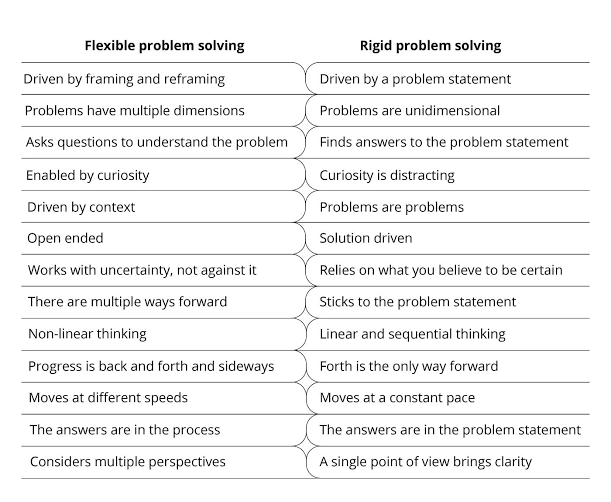
4. Flexible Problem Solving
Not every situation fits a script. Skilled agents can evaluate a case, weigh options, and choose the best action within their authorization boundaries, instead of mechanically following a decision tree. Teams that hire for judgment and train on decision frameworks scale better than teams that rely entirely on scripts.
5. Deep Product And Service Knowledge
Product knowledge is the baseline. Agents who understand not just features but limitations, common use cases, and known edge cases can recommend confidently and troubleshoot fast. Product training needs to be continuous, not a one-time onboarding event.
6. Time Management And Multitasking
Modern CS agents often handle several chat conversations in parallel across different channels. Skilled multitaskers maintain consistent response speed without dropping quality on any single interaction. This skill is closely tied to how well the agent uses their tools, so training here often overlaps with system training.
7. Continuous Learning Orientation
Products change, policies update, customer expectations shift. Strong CS teams have a learning mindset baked in, actively updating their knowledge and improving their approach after every interaction. This is the skill most correlated with long-term retention and promotion inside the team.
How To Handle Difficult Customers
Handling difficult customers is one of the highest-stakes situations any CS agent faces, and the response pattern separates skilled agents from average ones. A five-step framework used across enterprise CS teams:
Step 1: Listen Fully Before Responding
Let the customer say everything they need to say, even when the information repeats or gets emotional. Cutting in to explain immediately makes the situation worse. Take notes on the key points during the vent so the response can be focused.
Step 2: Acknowledge The Emotion Before Offering A Fix
Use phrases like "I understand how frustrating this must be" or "I can see why this is disappointing" to acknowledge the customer's emotional state before moving into problem-solving mode. This separates the feeling from the fact, and lets the conversation shift into constructive territory.
Step 3: Stay Professional Regardless Of Tone
Even when the customer's tone is aggressive, the agent's tone stays professional and neutral. Matching negativity escalates the conflict, and a brief pause to reset is more effective than pushing through with rising frustration.
Step 4: Offer A Concrete Solution With A Timeline
Once the issue is understood, propose a specific solution with a clear timeline. Avoid vague responses like "we will look into it," and use language like "I will get back to you in two hours with a specific plan." Then follow through on the commitment to maintain trust.
Step 5: Follow Up After Resolution
Send a follow-up message or email after the issue is resolved to check whether the solution met the customer's needs. This step turns a complaint into a loyalty moment and also generates data for improving the process.
Where Automation Frees Up Skill Time
CS agents who spend most of their day sending repetitive confirmations and reminders have less capacity for the interactions that actually need human skill. Automating routine outbound messages (order confirmations, OTP codes, appointment reminders) through channels like Zalo Notification Service frees agents to focus on the conversations where empathy, problem-solving, and product knowledge actually matter. The teams that use automation strategically end up with higher CSAT and lower agent burnout because human effort goes where it produces real value.
Training Customer Service Skills Effectively
Training a CS team is not a one-off onboarding event followed by learn-on-the-job. Sustainable programs run on multiple layers:
- Foundational onboarding for new hires: Combines product training, process training, and policy training with role-play practice on common scenarios during the first week.
- Recurring 1-on-1 coaching: Team leaders review individual conversations weekly or biweekly, giving specific feedback on strengths and areas to improve rather than generic performance ratings.
- Weekly product knowledge updates: Short 15-30 minute team sync each week to cover new features, policy changes, and edge cases that surfaced in the previous week's interactions.
- Quarterly soft skill workshops: Deeper training on topics like empathetic communication, conflict handling, and stress management, often with an external trainer to bring fresh perspective.
- Peer learning from case studies: Structured sharing of exceptional handling examples and hard-case lessons so the team learns collectively instead of each agent figuring it out solo.
Coaching A Local Team From Abroad
Foreign founders and operations leaders running Vietnam or Southeast Asia operations often hit a specific coaching problem: they cannot review conversations in Vietnamese without help, so training loops slow down and quality issues get spotted late. Managers end up either fully trusting the local lead's judgment or bottlenecking on translation, both of which limit how fast the team improves.
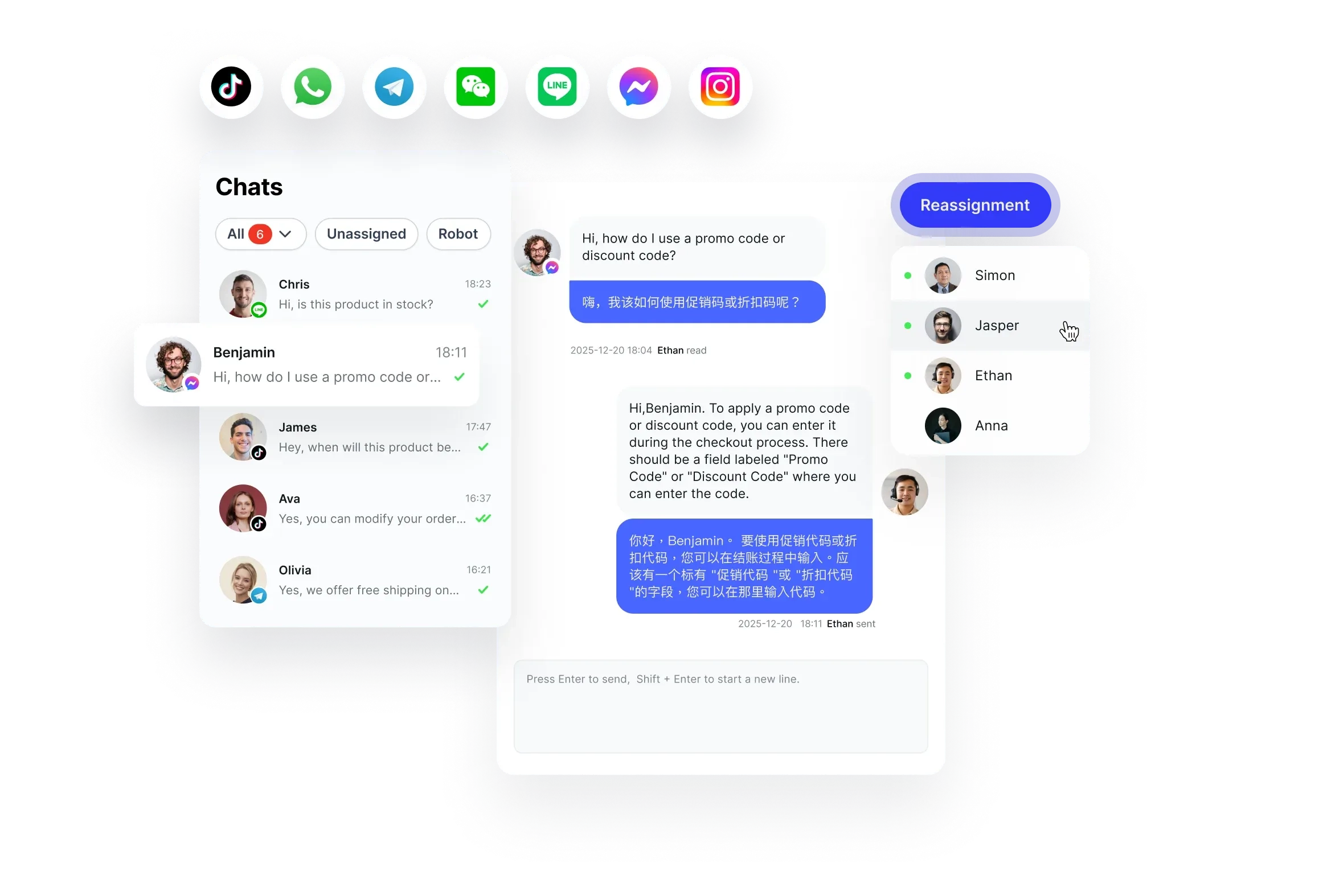
Platforms like SaleSmartly translate Vietnamese customer conversations into English in real time, so foreign managers can read what their team is sending, spot coaching moments, and give specific feedback the same day the interaction happened. This changes coaching from a monthly retrospective into an ongoing loop.
Common Skill Gaps To Watch For
Skill gaps show up in patterns across CS teams, and spotting them early lets team leaders coach before the gap costs a customer relationship:
- Reactive answering instead of proactive discovery: Agent answers the literal question but misses the underlying need, so the customer has to keep coming back for follow-ups.
- Script dependence without judgment: Agent handles standard cases well but freezes or escalates when the situation deviates from the script.
- Over-apologizing or under-apologizing: Both extremes damage trust. Skilled agents apologize when it matters and move on constructively rather than dwelling.
- Slow context reconstruction: Agent takes too long to review customer history before responding, making every interaction feel like starting from zero.
- Weak product knowledge showing through: Agent gives vague answers or defers to specialist too quickly, signaling to the customer that they are not talking to someone who can actually help.
How To Measure Whether Skills Are Improving
Skill development needs measurement or it drifts. The metrics that actually reflect CS skill quality are different from raw activity metrics:
- CSAT trends per agent: Direct signal of interaction quality from the customer's perspective, tracked over rolling 30-day windows to smooth out variance.
- First contact resolution rate: Percentage of issues resolved without needing follow-up contact, which reflects both product knowledge and problem-solving skill.
- Escalation rate: How often an agent escalates to a senior or manager. Sustained high escalation usually points to judgment or product knowledge gaps.
- Average handle time paired with quality score: Handle time alone is misleading, but paired with quality score it shows whether the agent is fast because they are skilled or fast because they are cutting corners.
- Customer effort score on complex cases: How much work the customer had to do to get their issue resolved, which reflects the agent's discovery and problem-solving depth.
Conclusion
Great CS teams are built through deliberate hiring, structured training, and continuous coaching, not through hoping the right personalities show up. If your team is starting to invest in skill development, the fastest path is to pick one weak area (usually either listening or difficult-customer handling), run a two-week focused coaching sprint with specific practice scenarios, then measure before-and-after CSAT on the affected conversation types. Focused improvement on one skill produces visible results faster than trying to raise everything at once.
What Is Email Marketing? ROI, Types, And How To Start Building An Owned Channel
What is email marketing? Learn how it works, why ROI beats other channels, common email types, platforms, and open rate benchmarks for teams starting out.
Real Estate Telesales Scripts: Structure, 3 Working Templates, And How To Handle Objections
Real estate telesales scripts that work: proven call structure, three ready-to-use templates for hot, cold, and post-showing leads, plus objection-handling frameworks.
